

Exhibitors enjoy choosing their trade show furniture, whether it’s a counter or a sofa or a bistro table or a casual chair. Fortunately, purchase and rental furniture choices continue to expand with more customization options than ever before.
Let’s make the selection process a bit easier by dividing trade show furniture into four categories: counters, seating, tables, and charging design. Then we’ll further narrow it down by describing whether you should purchase or rent that table, chair, lamp, or workstation (along with so much more).
We won’t cover every option, but with this knowledge and some guidance from an experienced trade show team, you’ll be up and running (or seated) in no time. Whether you’re looking for professional trade show rentals or fully custom exhibits – we’re ready to help.
An Introduction to Trade Show Furniture
Just like in a home or office, the furniture you choose drastically changes the room’s aesthetic and use. It’s important to note that furniture not only affects the area visually but can also dictate how people interact in the setting and even how they feel (comfort, color psychology, etc.) With all this in mind, it’s very important to be deliberate in your furniture selection and be sure it contributes to your vision, trade show goals, branding, and encourages your potential clients to engage with your team.
How to Choose the Right Trade Show Furniture for Your Booth
Too often, exhibitors choose rental furniture without considering the marketing goals or the thematic design of the exhibit. They browse through a catalog, see a comfy sectional in green, which matches the company’s corporate colors, and then must decide how it will fit in the existing booth space. Sometimes it works out just fine, but more often, it creates traffic flow issues or sales presentation challenges for your team.
When your trade show mission and the exhibit design are in alignment, choosing the right furniture can be the easiest decision you’ll make. While there are 100s of styles available in sofas, tables, chairs, etc., the choices are not unlimited. Your exhibit design professional can narrow those choices considerably based on your objectives, graphics, and branding. That is, if you involve them from the beginning.
Keep in mind that not all exhibitors need or want attendees to linger in their booth. They don’t need plush chairs with ottomans. Instead their sales process may be more about short intake meetings and presentations, where attendees engage with your team for 15-20 minutes. Attendees who linger too long in a crowded booth dissuade others from entering. Those are lost opportunities and maximizing opportunities can be critical to exhibitors.
Finally, while the size of your booth space may dictate your furniture options, don’t let anyone tell you that a 10-20 ft. space can’t have a casual lounge. It can… but as always, it depends on your marketing objectives and your sales strategy. Perhaps you have a complex product or service that requires time to determine the client’s needs. In that case, you may not need crowds, but you do need highly qualified leads.
Checklist: What Trade Show Furniture Do You Really Need?
Designing a trade show booth is a balancing act between style and utility. You want a space that looks inviting but doesn’t feel like an obstacle course for attendees.
Here is a breakdown of the essential furniture categories: .
- Welcome: Counters & Podiums. This is your “front door.” It serves as a greeting point, a lead-capture station, and a secure storage spot.
- Reception Counter: A waist-high surface for scanning badges and holding marketing collateral.
- Storage Podiums: Look for units with locking doors to hide staff personal items, extra brochures, or technical equipment.
- Charging Stations: Counters with integrated USB ports or wireless pads are a massive draw for battery-drained attendees.
- Engagement: Seating & Tables. The type of seating you choose dictates the “vibe” and duration of the interaction.
- Bar-Height Tables & Stools: Best for quick, high-energy demos. They keep the conversation at eye level with people walking by in the aisles.
- Lounge Furniture: Sofas or plush armchairs create a “dwell zone.” This is ideal for longer, consultative sales cycles where comfort helps build rapport.
- Cafe Tables: A middle-ground option for 10-15 minute sit-down meetings.
- Workplace: Product Displays. How you present your physical items or digital content is just as important as where people sit.
- Modular Shelving: Use adjustable heights to ensure products are at the “buy zone” (eye level).
- Literature Racks: While digital QR codes are popular, high-end brochures still benefit from a sleek, dedicated stand.
- AV Stands & Mounts: If you aren’t mounting monitors directly to the walls, heavy-duty kiosks or floor stands are necessary for stability.
- Necessities: Booth Essentials. Don’t overlook the functional items that keep the booth running smoothly.
- Anti-Fatigue Flooring: If your booth space allows, padded flooring or high-density foam under the carpet is a lifesaver for staff standing for 8+ hours.
- Waste Bins: Choose a small, discrete bin that matches your booth aesthetic.
Trade Show Counters, Workstations, Kiosks, Monitor Stands, and Pedestals
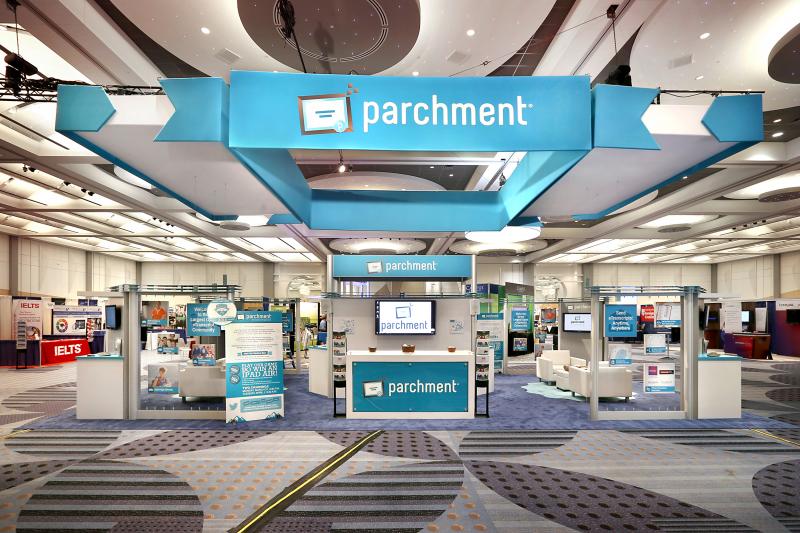
You might not consider reception counters or workstations, for example, as furniture, but they’re the essential workhorses of most modern exhibits. Most have features like locking storage, shelves, and even wire management, which isn’t all that different from traditional office furniture.
There are really three criteria to choosing the right ones for your booth.
First, does it fulfill a practical purpose in your space? Like holding a monitor, storing literature or promotional giveaways, featuring your products (think glass showcase), or functioning as a meeting space to interact with attendees. Booth spaces are tight, and furniture for the sake of furniture is expensive and counter-productive (pun intended).
Secondly, does it match your design objectives? Not only do you not want furniture that doesn’t serve a practical purpose, but you don’t want one that’s the wrong color, style, or shape to the overall design. You might be wondering why anyone would choose furniture that doesn’t match the design or theme of the booth. Sometimes it’s simply a lack of planning but more often it’s a decision based on cost. Imagine a beautiful island exhibit in bright, bold colors. A reception counter in those same colors would be perfect. Instead, the exhibitor chooses a portable counter with aluminum supports and a black countertop. It’s functional but an odd duck in a sea of swans.
Thirdly, should you purchase or rent the furniture? Sometimes that choice is easy. For example, a casual lounge or seating area will most likely include rental sofas or chairs, along with end or coffee tables. Not only is shipping those items expensive, but damage is often unavoidable. It’s almost always better to rent. On the other hand, reception counters, workstations, or kiosks are often integral to the overall design aesthetic of your booth. Plus, they’re easy to ship and will be used again and again. As a result, most exhibitors buy those items.
5 Modern Trade Show Furniture Examples
Below are three examples of trade show furniture components you can buy or rent. The choice will depend on your budget and your overall trade show marketing strategy.

MODN-1590 (REN-1584) Backlit Counter: This full-assembled custom counter includes backlit fabric graphics, locking storage, and internal shelves. It ships fully assembled.
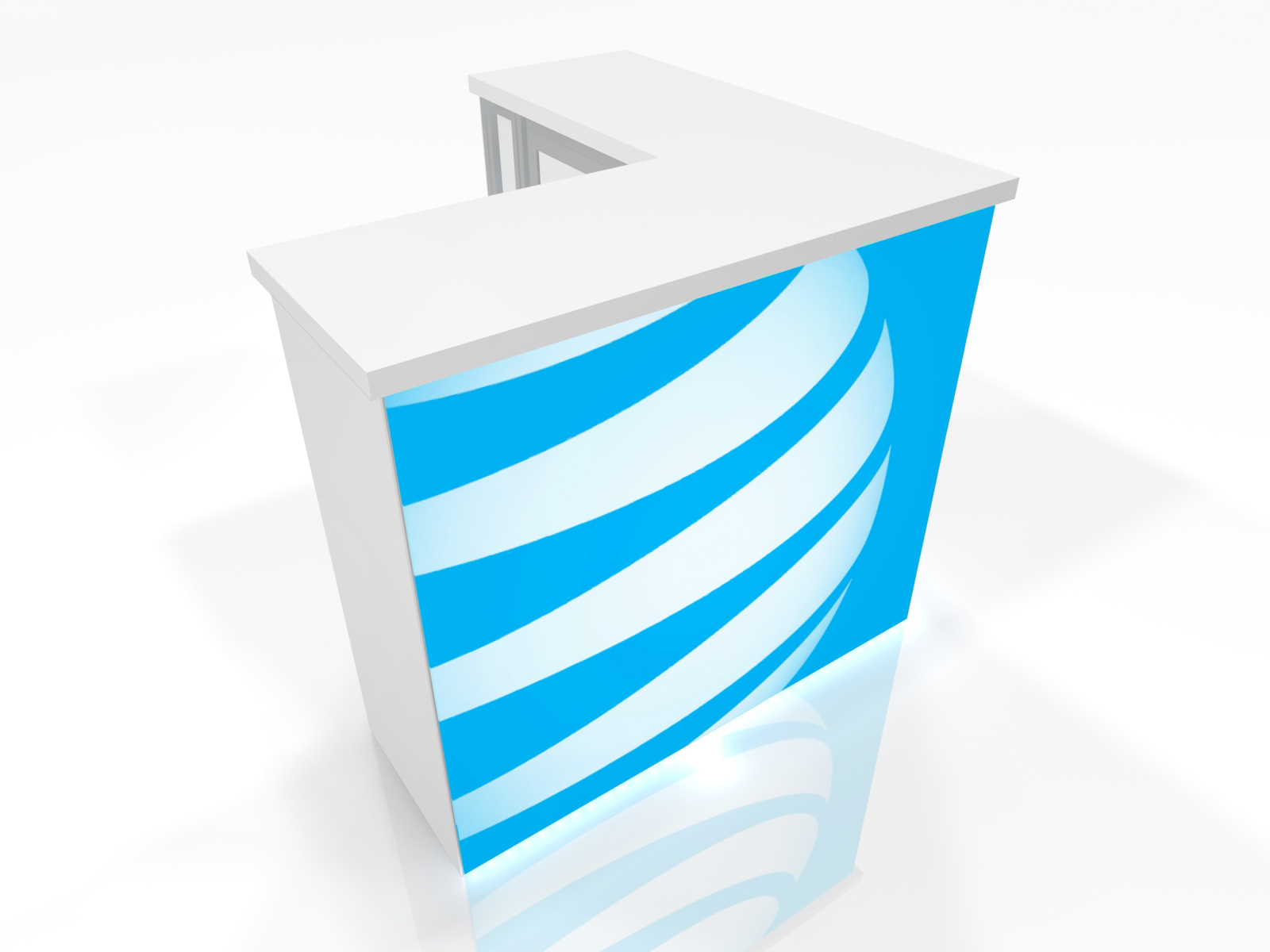
MODN-1722 (REN-1572) Modular Backlit Counter: The MODN-1722 is an L-shaped modular counter with extensive storage and large backlit fabric graphics. It ships fully assembled.
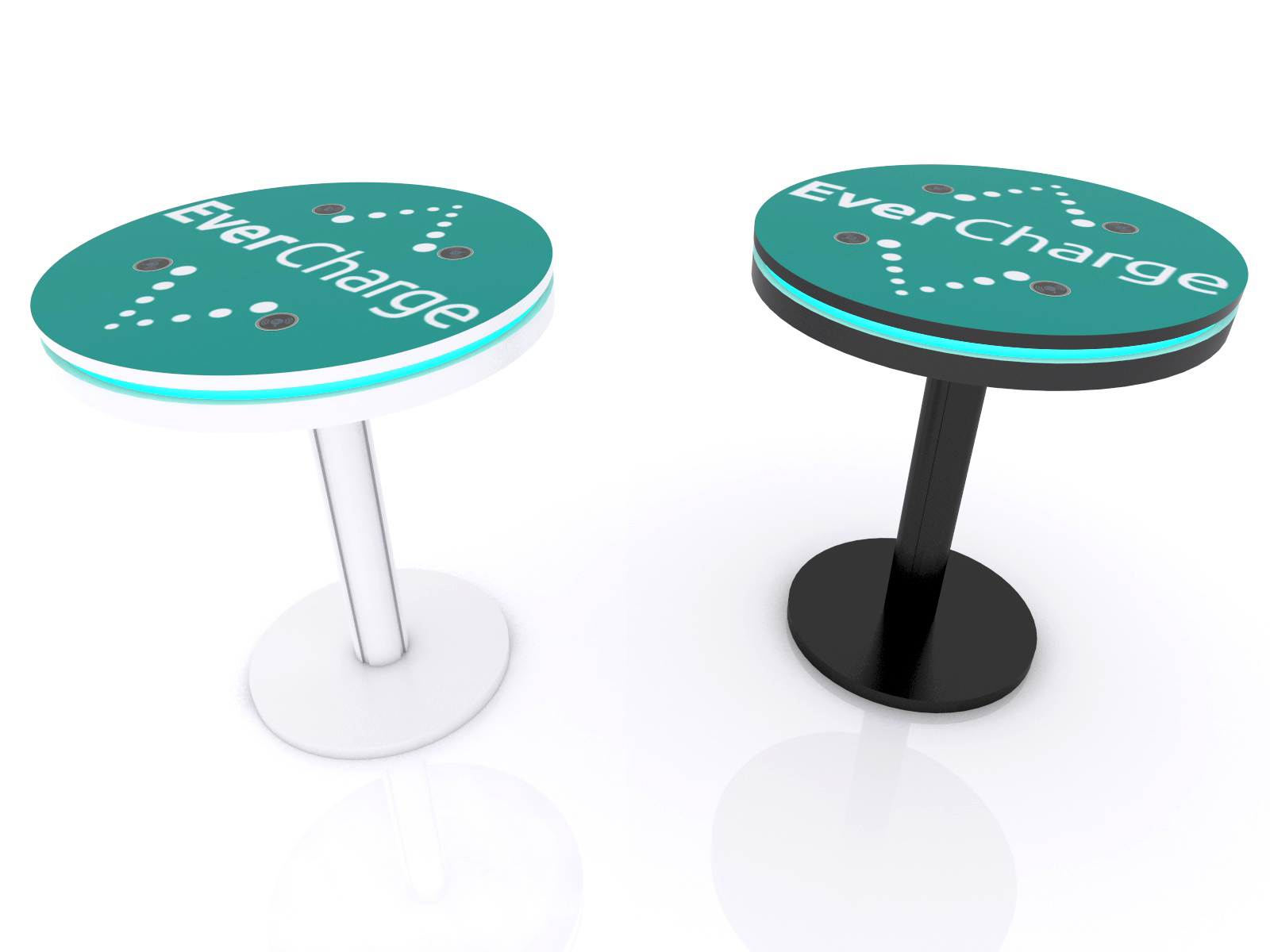
MODN-1453 (REN-704) Charging Table: The MODN-1453 charging bistro table is ideal for meeting with clients and includes charging options and LED accent lights.
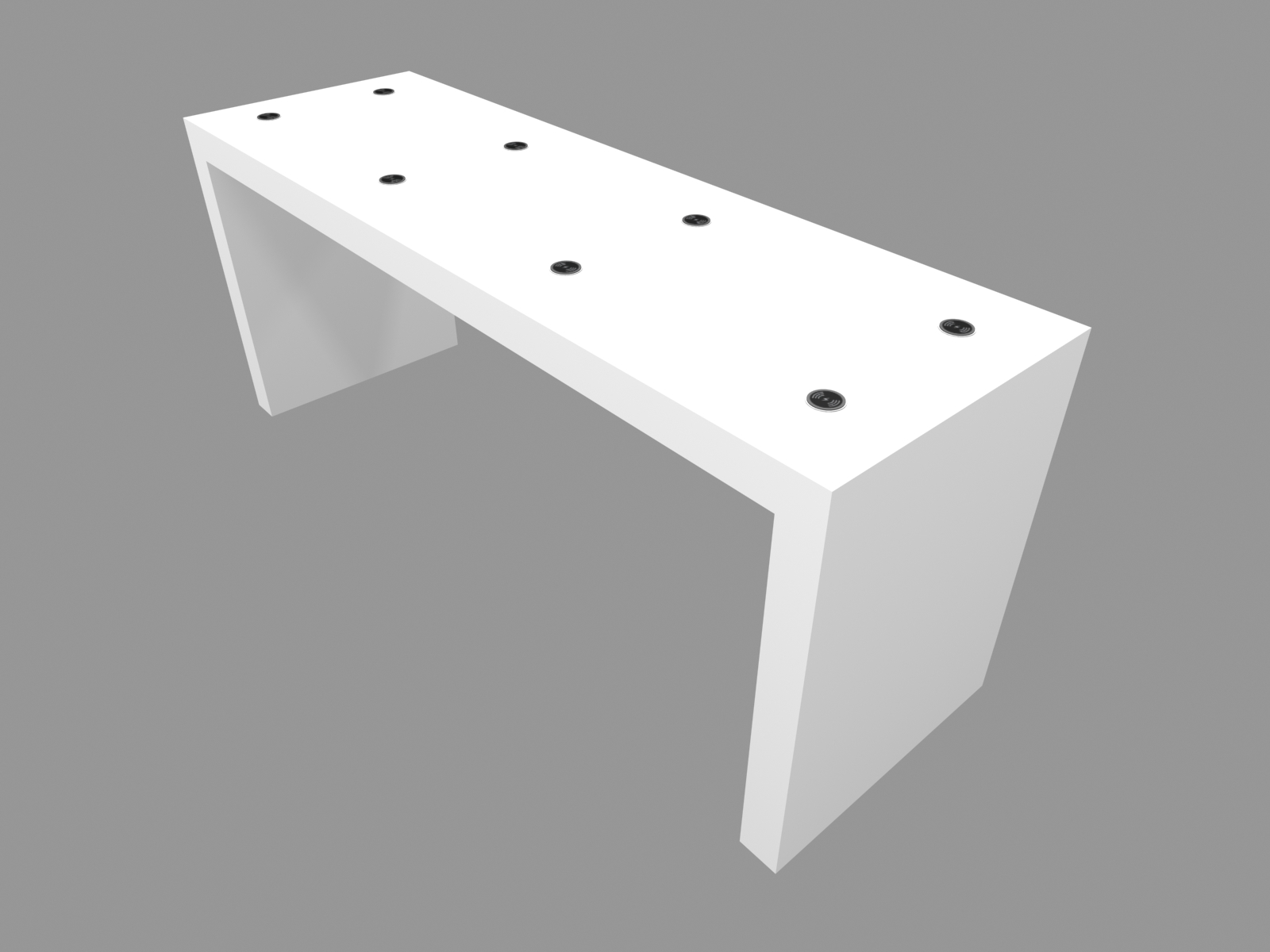
MODN-1732 (RE-1596) Genius Bar: A Genius Bar can be used as a meeting table or to feature products. It includes (8) wireless charging pads.
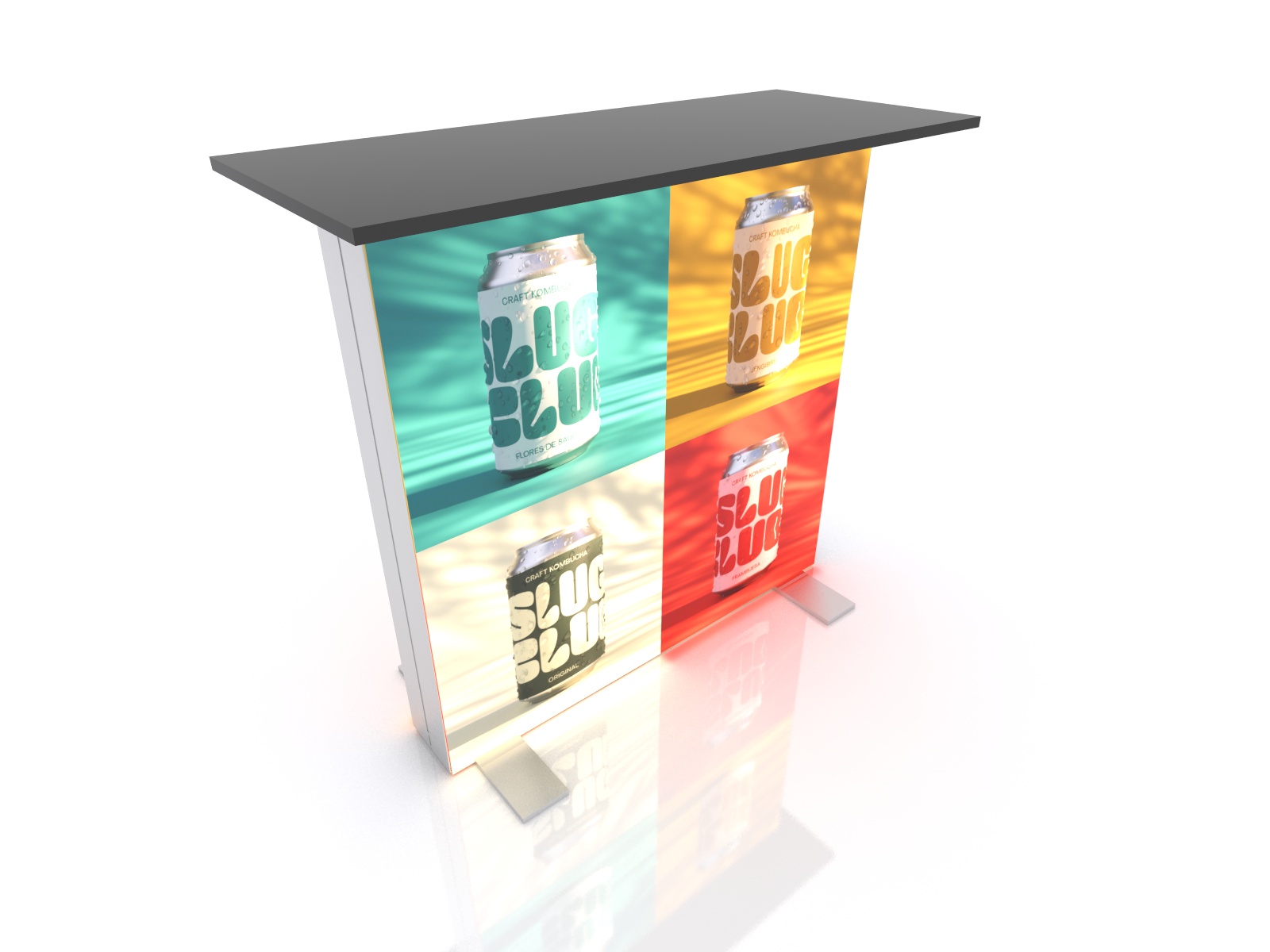
MODN-1718 (REN-1590) Lightbox Counter: A double-sided lightbox counter with vibrant fabric graphics. Assembles quickly without tools.
Trade Show Tables
If you’re thinking… “tables are tables,” then you haven’t explored the broad array of trade show tables available to rent. Gone are the days of heavy conference tables with dark wood and uncomfortable chairs. Tables now come in a variety of materials, sizes, colors, and styles. Some even include charging options for tablets, computers, and phones.

Trade Show Table Categories
Cafe Tables w/ or w/o Height Adjustments – Cafe tables are typically round with a 30 to 36” diameter countertop. Colors vary. For example, this 36” Cafe Table has four color options: black, white, graphic nebula, and maple.
Bar Tables – Bar Tables are similar to Cafe Tables but are typically 42” high (vs. 29” H).
This Powered Bar Table includes (1) AC and (2) USB Ports
Conference Tables – The conference table selection is impressive starting with a contemporary 36” Dia. glass and chrome Atomic Table. Not large enough? Choose from a 5 ft. powered conference table all the way up to a 10 ft. Conference Table in white, gray, or black.
Seating Tables – Comfortable seating has grown in popularity, along with casual tables like end tables, cocktail tables, and side tables. The Geo End Table with chrome accents and a glass top and the Twist Side Table in antique brass and black are excellent examples.
Bars – While not strictly a table, curved bars are a popular rental option for many exhibitors. The Midtown line includes both powered and lighted versions.
Presentation or Product Tables – Think of product tables like in an Apple store. Often called Genius Bars, these vary in width from 5 ft. to 8 ft. and can include wireless charging pads.
Banquet Tables – When covered with a branded tablecloth, these are perfect for smaller booth spaces or for tabletop displays.
Trade Show Furniture Tip #1
Wire management is one of the single biggest details overlooked when designing and preparing for a trade show because no one asks the right questions about what equipment or devices will be in the booth space. As a result, what would have been an inexpensive and inconspicuous wire management solution if handled during the exhibit build becomes an expensive, damaging, and ugly solution when handled on the show floor.
Trade Show Seating
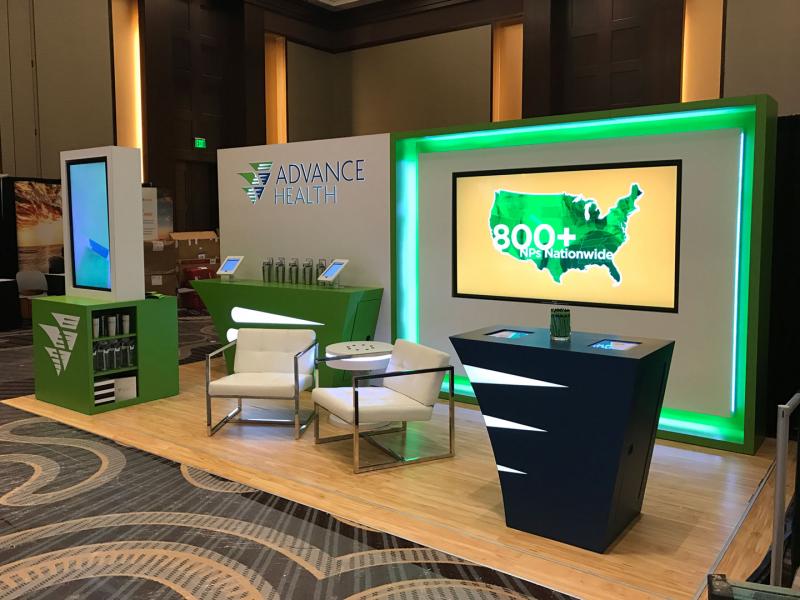
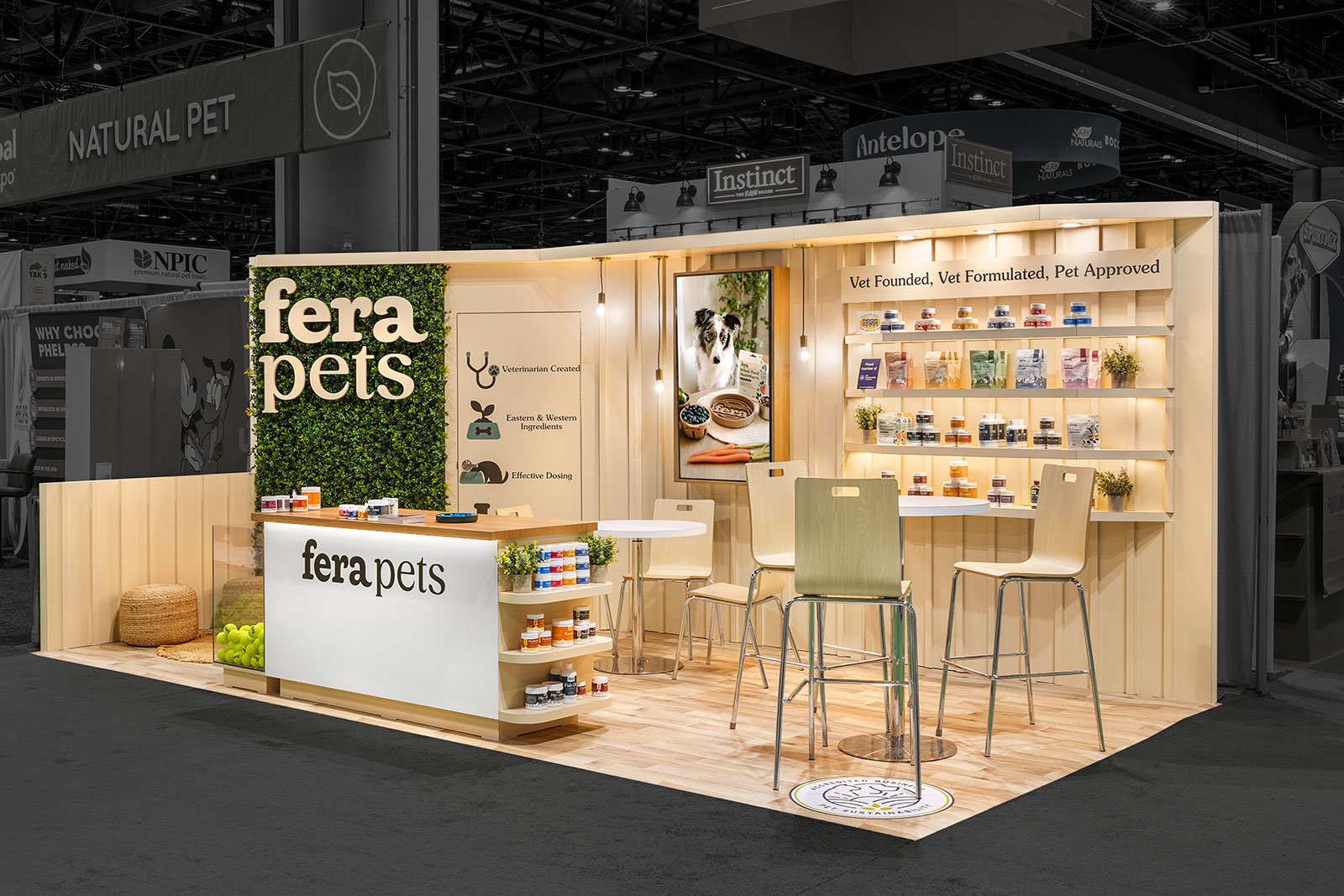
Seating used to be a no-no in a trade show booth, except for meetings. Not anymore. Seating is the unsung hero of trade show furniture. Stroll through any trade show, large or small, and seating is a “must-have” for both booth staff and attendees. And it’s not just limited to large islands. Most 10 or 20 ft. inlines have seating as well. And why not? Everyone wants to be comfortable and if seating means potential clients linger while discussing their product or service needs then it’s a win-win.
When it comes to seating, your options are extensive, whether you’re looking at bar stools or upholstered furniture.
Seating Categories Include:
- Conference Chairs – Office chairs for a desk or conference table
- Bar Stools – Elevated chairs with footrests with or without backrests
- Accent Chairs – Upholstered or leather chairs typically found in lobbies or offices
- Soft Seating – The good stuff! Comfy sofas, loveseats, and chairs for lounging
- Group Seating – Individual chairs for large groups during presentations or events
- Ottoman – Matching ottomans for both soft seating and accent chairs
Trade Show Furniture Tip #2
If someone tells you that seats in a booth are unprofessional, then don’t walk away – have a seat. If your booth staff is relaxing in chairs and ignoring potential clients, that’s not the fault of the chairs. It’s a training issue or you’ve simply brought the wrong team to the show. Sitting down is not a crime. Ignoring business opportunities in your booth is!

Trade Show Charging Tables and Kiosks
Charging tables and kiosks are increasingly common in trade show booths. As an attendee, finding outlets on the show floor to charge your phone, tablet, or computer can be an adventure. How often have you seen someone sitting on the floor in the corner of an exhibition hall with their phone cord plugged into a random outlet?
Attendees (and your staff) appreciate convenient charging options in a booth where they can sit and chat.
Newer charging tables and kiosks come with both USB and wireless options. Plus they can be branded with your logo or marketing message. Not only are the tables available in a variety of shapes, like round, square, rectangle, and octagon, but they are also available in bistro, end, and coffee tables. Most have attractive LED lighting too, which can be customized to match the primary color of your booth. Gone are the days when the only charging option looked like someone stole it from the airport on the way to the trade show.
3 Beautiful Charging Table Solutions
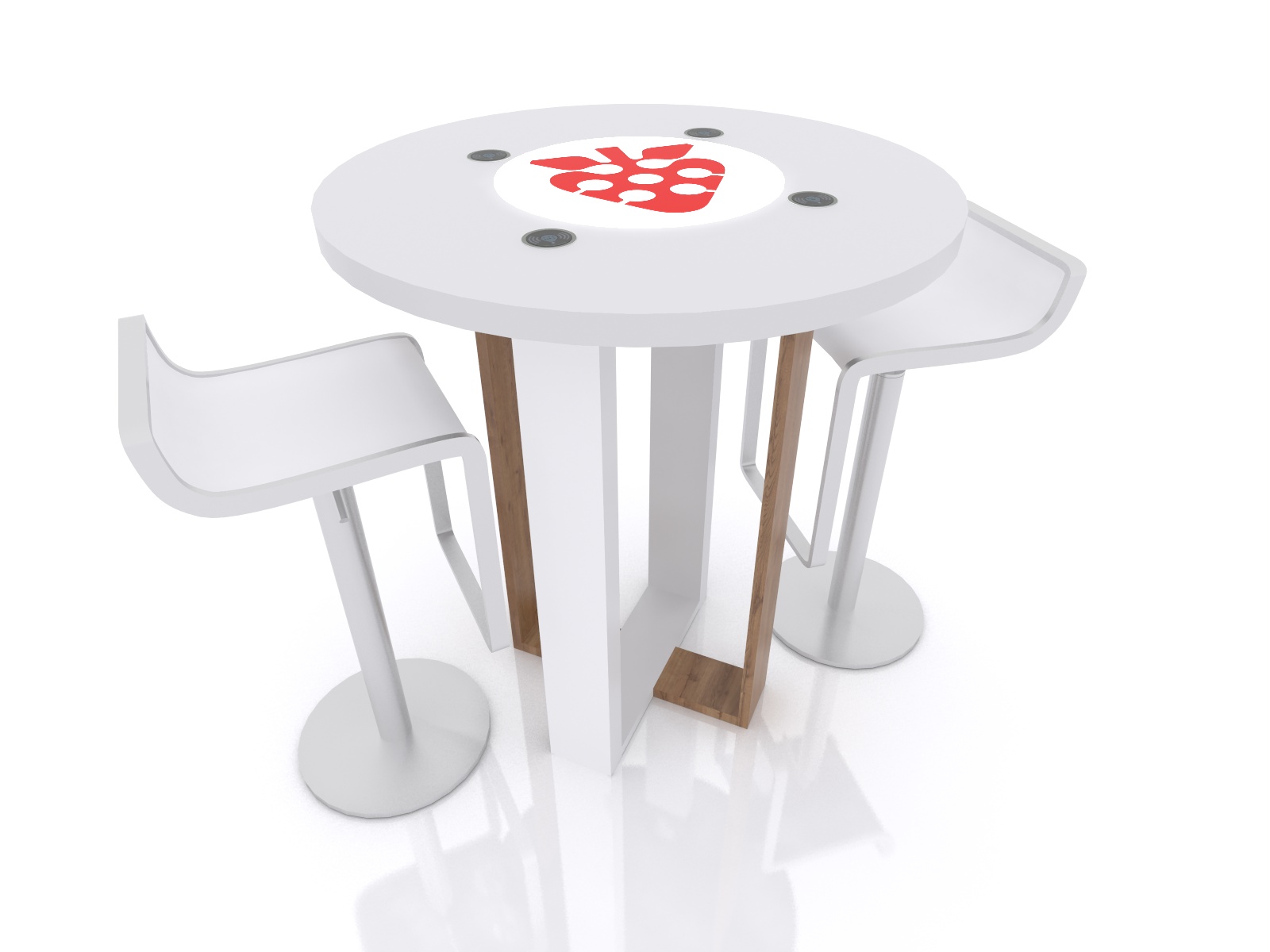
MODN-1482 Bistro Charging Table: This contemporary fully-assembled charging table has (4) wireless charging pads and LED Accent Lights.
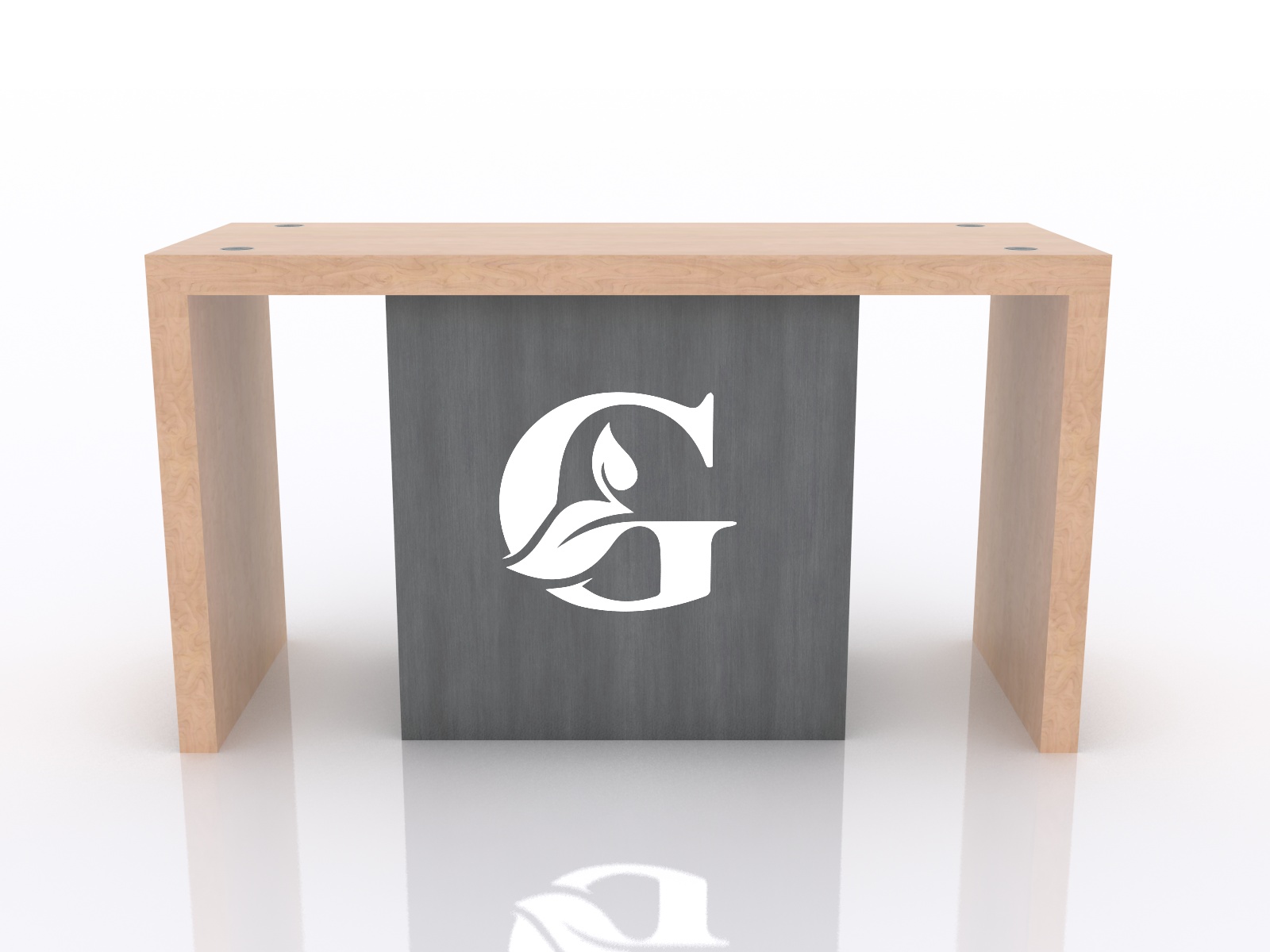
MODN-1707 Parsons Counter: Parsons counters offer exhibitors a longer yet lower countertop for showcasing products or services. This counter includes (4) wireless charging pads, locking storage, and a backlit logo.
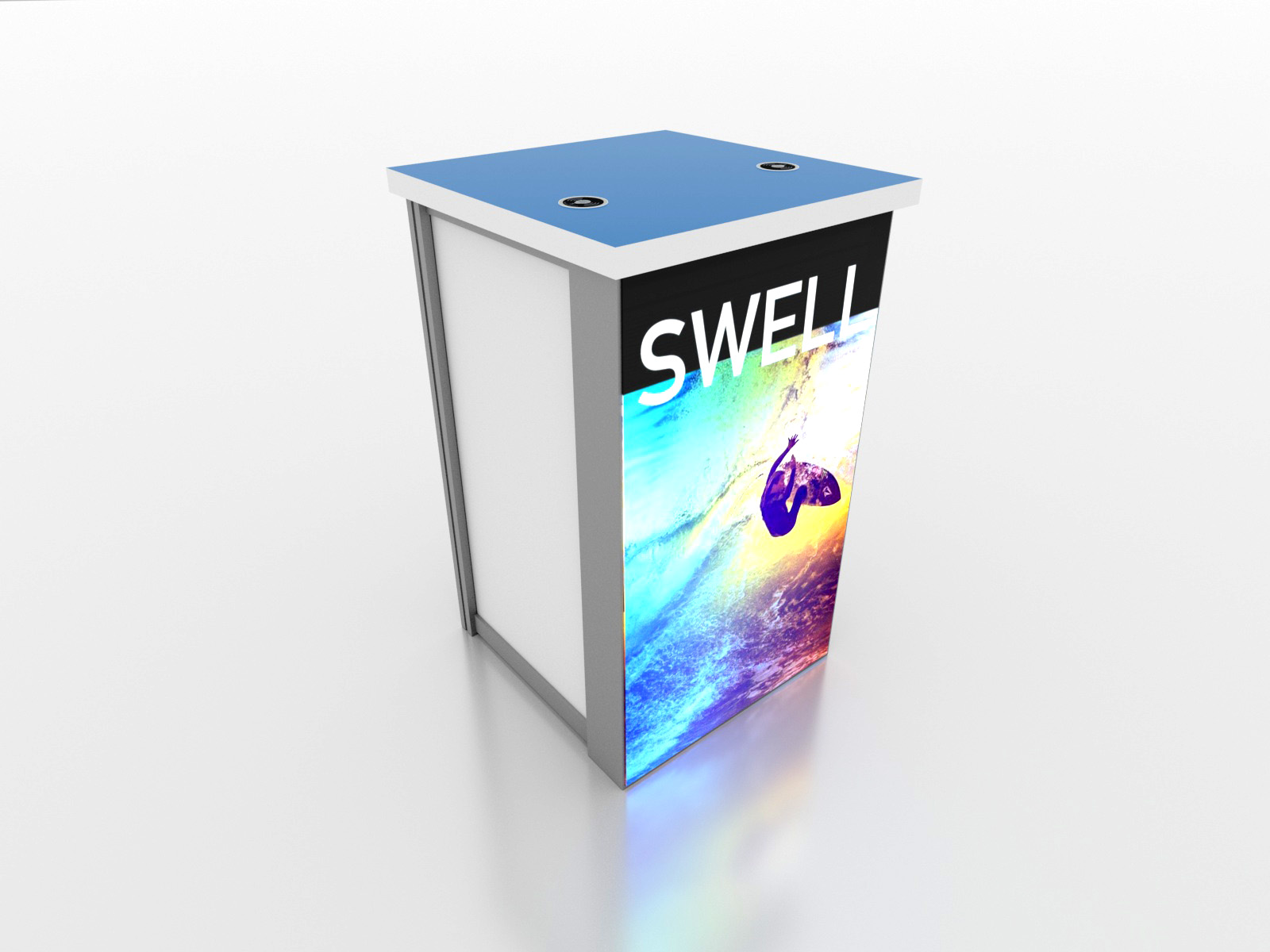
MODN-1701c Backlit Charging Counter: This portable 23” x 23” x 38” counter has a backlit graphic, locking storage, and (2) wireless charging pads.
The Importance of Portable Trade Show Furniture
Should you rent or purchase furniture for your booth? The reasons for renting are discussed below, but buying furniture, particularly portable furniture is a cost-effective option for some exhibitors. There are two options: purchasing ready-to-assemble furniture (like IKEA) and assembling it at the show and buying furniture meant to be assembled and disassembled repeatedly.
Ready-to-assemble furniture can be an inexpensive option, with some downsides.
First, the furniture has to be shipped and assembled onsite. Unfortunately, unassembling it and packing the furniture can be challenging. Damage is common. Many exhibitors will simply leave the furniture in their booth at the end of the show. Not surprisingly, most General Show Contractors will charge a disposal fee if furniture is left in the booth which can often exceed the actual cost of the furniture.
Instead, consider portable tables and chairs that fold or disassemble easily. These can be repacked in their existing boxes and/or packed in shippable roto-molded cases or wood crates. Exhibitors with an active trade show schedule can save considerable money by bringing portable furniture rather than renting it each time. In addition, the furniture can be branded with the company’s logo, colors, and messaging, which isn’t always possible with rental furniture.
When deciding between renting vs. purchasing portable furniture, consider not only the short-term cost but also the long-term cost of shipping and storage.
Modular Trade Show Booth Furniture
What does modular mean to you? When it comes to furniture, particularly furniture for trade shows, it typically has two distinct meanings. Let’s explore both.
Modular Assembly. In this case, it refers to counters, tables, kiosks, and workstations that are built to be disassembled for shipping. That way, it optimizes space in a crate or portable case. Modular can be a bar counter, like the REN-1211, which includes locking storage, a two-tiered countertop, and graphic options. Or a lightweight counter like the REN-1255, which includes internal storage and assembles without tools.
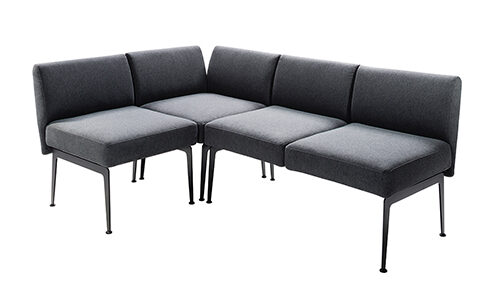
Modular Seating Design. Think sectionals or matching sofas and chairs. As seating options have become more popular in trade show booths, so has modular seating. For example, the Munich line includes an armless chair, a corner chair, a loveseat, and a sectional. The Endless line is even more extensive with 23 variations of curved sofas, low back chairs, ottomans, and loveseats. In two colors options.
Trade Show Furniture Rental Solutions
Renting your trade show furniture as opposed to buying it can be an easy way to elevate the aesthetics of your booth space. Alternatively, starting with rentals makes it easier to make an informed purchasing decision.
Your trade show consultant can take you through all the types of trade show furniture. Your options are extensive, whether you’re looking at bar stools, tables, or upholstered furniture. In some situations, it may make sense to purchase furniture, like chairs for a meeting room, but in most cases, renting is a smarter solution. Yes, rental furniture can be somewhat pricey, but remember, buying and shipping furniture is inconvenient and expensive, and the likelihood of damage is very high. Plus, renting furniture gives you the freedom to make changes from show to show.
Trade Show Furniture Tip #3
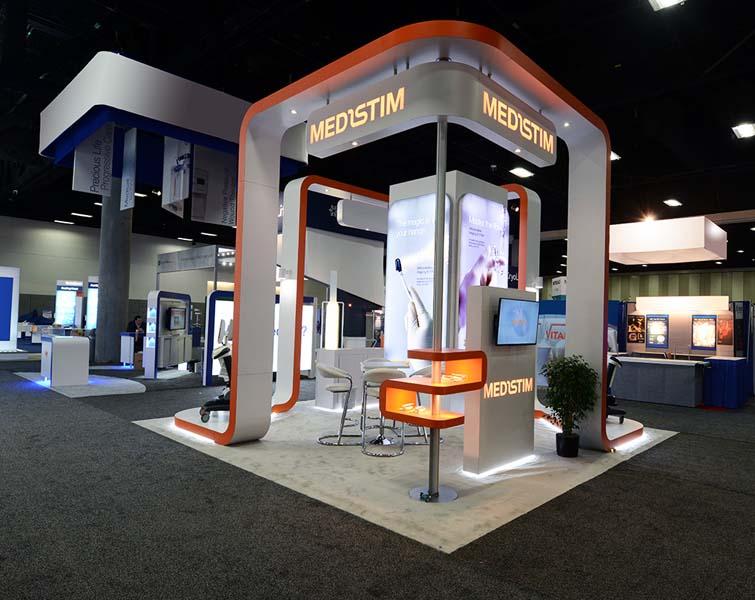
Work with your exhibit house when selecting rental trade show furniture. They have relationships with multiple furniture rental companies and know which companies will have the best service and selection depending on the venue. In addition, they can often secure better pricing than what’s being offered by the show contractor, whose selection can be limited. After all, you don’t want to look the same as 15 other exhibits on the show floor.
Custom Tradeshow Furniture
Your design or marketing strategy may require something unique. Fortunately, most exhibit houses have the design and fabrication skills to create whatever you want. That may mean a large serving counter with a sink, ice tray, or layered shelves. It could be an AV kiosk with multiple monitors, product shelves, literature holders, and locking storage.
Here are a few examples of custom furniture, designed specifically to fulfill the trade show requirements of an exhibitor.
Example #1. The client wanted a multi-purpose reception counter with branding, storage and shelving. The counter includes a backlit graphic, three shelves on the side, and a plex container for products.
Example #2. In order to maximize space and storage, this custom triangle kiosk has shelving, storage, and fabric graphics on three sides. Ideal for companies with physical products.
Example #3. This double-sided kiosk has LED accent lights, graphics, shelves, and a monitor mount in an attractive structure.
Example #4. Custom product consoles with electrical plugs, ventilation, and internal storage access.
Common Mistakes to Avoid When Choosing Trade Show Furniture
Choosing the wrong furniture can turn a high-end booth into a logistical nightmare. Even the most beautiful pieces can fail if they don’t account for the unique physics and rules of a convention center floor.
Avoid these common pitfalls:
Over-Furnishing the Floor Plan. The most frequent mistake is “blocking the flow.” If attendees feel like they have to navigate a maze to talk to you, they will simply keep walking.
- The Trap: Buying a full lounge set for a small 10 x 10 space.
- The Fix: Maintain at least 3 to 4 feet of open aisle space within your booth. Use a “less is more” approach—prioritize one statement piece over three cramped ones.
Selecting the Wrong Seating Height. Seating height dictates the “power dynamic” of a conversation.
- The Trap: Using low-profile lounge chairs right on the aisle.
- The Fix: Use Bar-Height (42″) stools for the perimeter. This keeps your staff at eye level with passing attendees. Save the low, comfy seating for deep-booth areas where you intend to have long, private conversations.
Forgetting the Cables. In a tech-heavy world, furniture must be “cable-ready.”
- The Trap: Placing a beautiful reception desk in the center of the booth with no way to hide the laptop or lead-scanner wires.
- The Fix: Only purchase or rent counters with integrated cable management ports (grommet holes). Ensure your furniture placement aligns with where the convention center’s “floor port” power drops are located.
Underestimating Storage. A booth cluttered with staff backpacks, water bottles, and extra brochures looks unprofessional.
- The Trap: Choosing open-legged tables or desks.
- The Fix: Every counter or podium should have internal shelving and a locking door. This keeps the booth looking pristine while giving your team a secure place to store their valuables.
Finally, new exhibitors will often compare the cost of buying furniture vs. renting furniture. After all, why not purchase a table and chairs from IKEA? However, they neglect to consider the cost of shipping, assembly, and material handling. Those charges negate the savings of buying ready-to-assemble furniture. Plus, exhibitors often leave the furniture behind, which means it gets tossed into a dumpster and taken to a landfill. Unlike rental furniture which is used again and again over several years.
The Finishing Touches: Getting Creative with Your Booth Furniture
Two guesses on the most popular color for trade show furniture. Here’s a hint: It’s not black.
White. When it comes to choosing a color, most exhibitors go with a neutral color, like white. And honestly, it makes sense. Rental booth furniture, along with flooring, is often the last decision an exhibitor makes, often long after the graphics are designed. Sometimes the booth has been built and the graphics printed when the exhibitor decides on their booth furniture.
Whether you choose to rent or buy, furniture doesn’t have to be a blah decision. Start by sharing your vision during the exhibit design process. Exhibit designers have access to digital libraries from multiple rental furniture companies. If you give the designer the freedom to be creative while achieving your trade show marketing objectives, they’ll find furniture that matches both the theme of the booth and the vibe of your company.
Sometimes that may require purchasing some items, but more often it means working with the furniture rental provider. Many have fabric options for ottomans, rugs, and pillows. In addition, hard surfaces can be covered with vinyl for specific colors or patterns. Even small design additions can have a big impact on the overall design.

Why Work with a Full-Service Exhibit Partner for Furniture Needs
Seriously, don’t you have enough to worry about? Why add furniture to your task list?
A full-service exhibit partner, like Exhibits Northwest, serves as a shield between you and the chaos of the trade show floor. Plus, they understand how a simple place to sit can be a strategic element in your overall booth design.
Five Fast Reasons to let your exhibit partner handle your furniture needs.
- Logistics and Material Handling. Buying it is easy. Getting it to and from your booth is the hard part.
- Design Cohesion. Are you an interior decorator? Or an exhibit designer? Probably not (to both). A partner ensures your furniture matches your brand’s color and marketing objectives.
- Trouble-shooting. Trade shows are unpredictable. Knowing how to navigate and solve the unsolvable is what makes an exhibit partner an invaluable resource.
- Storage. When it comes to furniture, most exhibitors rent some and purchase some. You don’t need to buy a sofa but you probably will want to own your reception counter. Managing that inventory is what a full-service exhibit partner does for a living.
- Strategy and Layout. Let’s say you’re a trade show road warrior. You’ve attended 20 shows over the past 5 years. Your exhibit partner has designed a 1000 exhibits during that time and attended 300 shows. They don’t know it all, but they know more than you. Ego may get you what you want, but it might now get you what you need.
Need Help Pairing the Right Trade Show Furniture with Your Booth?
We’re here to help with every intricacy of trade show exhibits, from furniture to layout to planning and beyond. Count on our well-experienced consultants to listen and come to understand your brand before making some dynamite suggestions.
The next time you need anything to do with trade show furniture, reach out to Exhibits NW.