


A custom exhibit forces many exhibitors to reevaluate their trade show marketing. And that’s a good thing since a custom booth requires developing a detailed marketing strategy and implementation. Suddenly… The seat-of-the-pants approach to trade shows is no longer an option.
When you tailor the design, layout, graphics, and overall aesthetics of your trade show booth to your brand identity, your brand messaging improves along with your brand consistency and recognition. A well-designed exhibit will attract attention and curiosity, maximizing foot traffic and potential leads. Customization = personalization, meaning a custom exhibit gives you the flexibility to target a specific audience and boost engagement. Custom trade show exhibits are flexible and adaptable, making them a worthwhile long-term investment!
How Custom Exhibits Enhance Your Trade Show Presence
Custom exhibits can help you stand out from the competition. When you have a custom exhibit, you’re not just another booth in a sea of similar ones. Your exhibit will be unique and eye-catching, which will help you attract attention from potential customers and clients.
It can help you create a memorable experience for visitors. A well-designed custom exhibit can be a great way to engage visitors and leave a lasting impression. You can use your exhibit to tell your company’s story, showcase your products or services, or simply provide a comfortable and inviting space for visitors to learn more about your business.
It can help you generate leads. A custom exhibit can be a great way to collect contact information from potential customers and clients. You can do this by providing visitors with business cards, brochures, or other promotional materials. You can also use your exhibit to encourage visitors to sign up for your email list or follow you on social media.
It can help you boost your brand awareness. A custom exhibit is a great way to get your company’s name and logo out there in front of a large audience. When people see your exhibit, they’ll be more likely to remember your company and what you do.
Custom Trade Show Exhibits Design That Reflects Your Brand
Every brand has a personality. The trick is to capture that personality in your custom exhibit. But a custom exhibit is more than just your logo, colors, and tagline. First, don’t start with the exhibit design. An exhibit designer can’t do their job if they don’t have a clean roadmap of your marketing goals and expected outcome from the trade show. That has to come first before you ever engage your exhibit house. Once you have that in place, it’s time to design your booth.
Designing a custom trade show exhibit is like building a temporary flagship store. It’s about creating a physical manifestation of your brand’s personality that stops people in their tracks.
Here is a step-by-step guide:
- Define Your Brand and Goals: Before picking colors, you need to define the booth’s purpose. A brand focused on a new product or service looks very different from one promoting your history.
- Determine the Objective: Are you launching a product, collecting leads, or hosting private meetings?
- Identify Brand Attributes: Pick three words that describe your brand (e.g., Minimalist, Rugged, High-Tech). Every design choice must filter through these words.
- Layer Your Brand Architecture: Your booth needs to be readable from three different distances. If a visitor can’t tell what you do from 20, 10, and 5 feet away, you’ve lost them.
- High Signs: Use hanging signs or towers for brand recognition.
- Eye Level: Use large-scale graphics to communicate your primary value proposition or product.
- Touchpoints: This is where the details live—product demos, brochures, and digital kiosks.
- Translate Your Brand into the Structure: This is where custom design happens. Don’t just slap a logo on a wall. Weave your identity into the structure.
- Design for Traffic Flow: A brand that claims to be “customer-centric” shouldn’t have a booth that feels like a fortress or a maze.
- Open vs. Closed: An open floor plan welcomes attendees into the booth.. A semi-enclosed space suggests exclusivity and deep consultation.
- Cognitive Ease: Allow space at the entrance so people don’t feel they’re being “hunted” the moment they step onto your carpet.
- Integrate Technology w/ a Purpose: Tech should enhance your brand story, not distract from it.
- Interactive Demos: Use touchscreens or VR if your product is hard to transport or explain.
- Charging Stations: A great way to be “helpful” (a brand trait!), but ensure the branding is visible while they wait.
- Lead Capture: Ensure the tech used for scanning badges is seamless and doesn’t create “clutter” on your reception counters.
Thorough the design process, look at it critically. If you removed your logo, would people still have a sense of who you are? Is your messaging more than just your logo? Does it create curiosity, is it memorable, and does it spark engagement? Great booth designs do all three.
Key Elements of a Custom Display
Think back to the last time you bought a vehicle. Once you decided on a model, you were then presented with “custom options.” But, in fact, the options were simply packages that 1000s of others could select as well. With a custom trade show exhibit, you have unlimited opportunities to design a booth for your brand and your marketing requirements. Will budget play a role in those decisions? Of course. But creativity doesn’t always have a price. So… let’s start with the basics or key elements of almost all custom displays.
- Finishes and Colors. Your brand matters. For many exhibitors, the brand’s color and finish are the base coat of any successful design.
- Layout. Yes, inlines are inlines and islands are islands but don’t let the rectangular or square footprint be a limitation. Your layout should fit your objectives. Do you need presentation areas, meeting rooms, demo stations, reception counters, and interactive games or activities?
- Graphics. All too often, exhibitors spend weeks designing the structure and days designing the graphics. Usually in that order. The exhibit structure and the graphic treatment should proceed hand-in-hand during the design process. And graphics often change from show to show. So what made sense at Show #1 may not be appropriate at Show #2.
- Display. Many custom exhibits are built using modular walls, both wood, and aluminum, your custom display should look like it was built specifically for you, and not just a display rebranded with your logos.
- Accessories and Interactive Elements. A custom display should seamlessly integrate into all the other elements in your booth, like counters, workstations, and furniture, and enhance the overall experience. This can be done with Audio, Video, Lighting, and Interactive Elements like games or touchscreens.
6 Branded Trade Show Display Examples
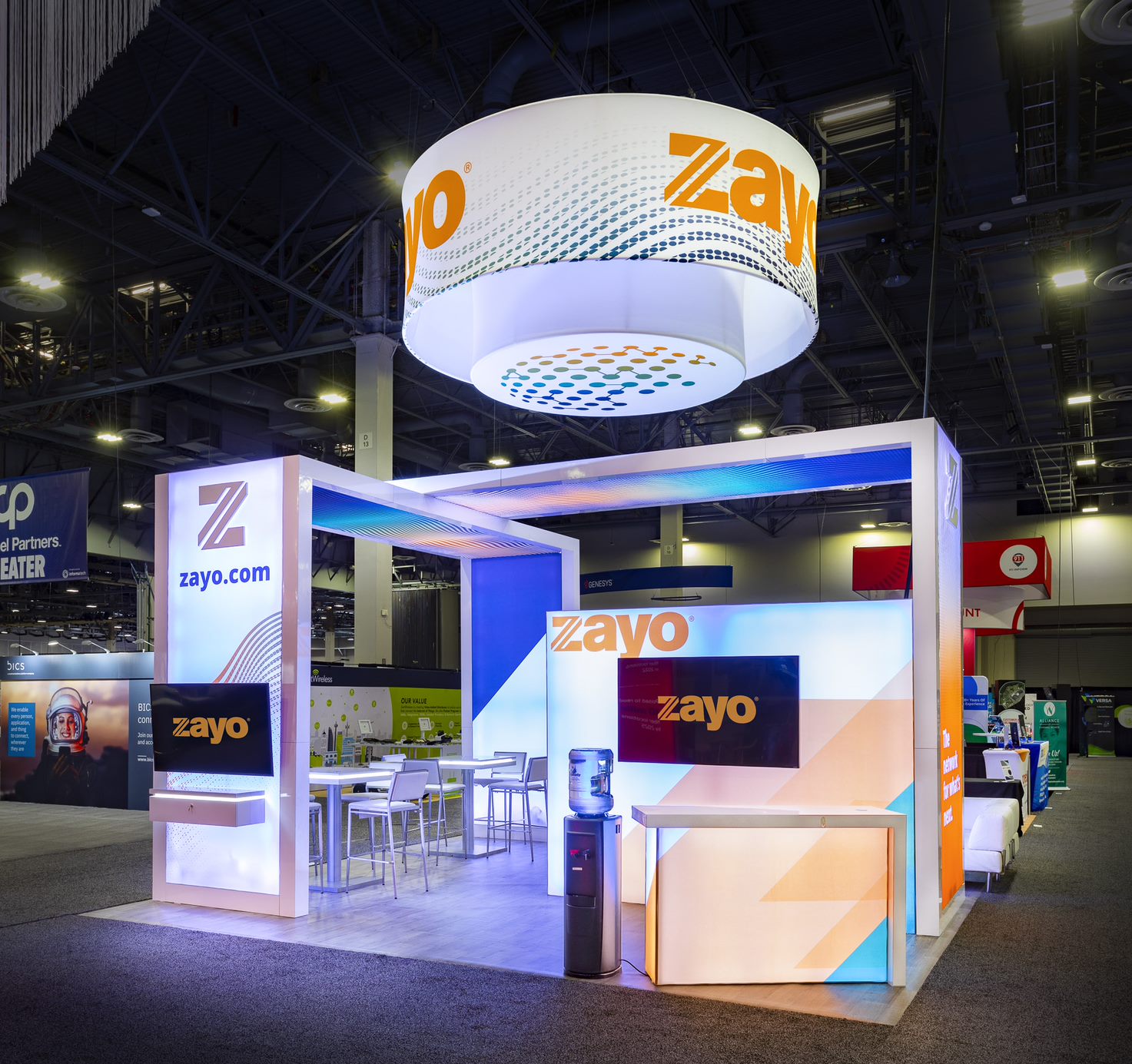
1. Zayo Custom Exhibit
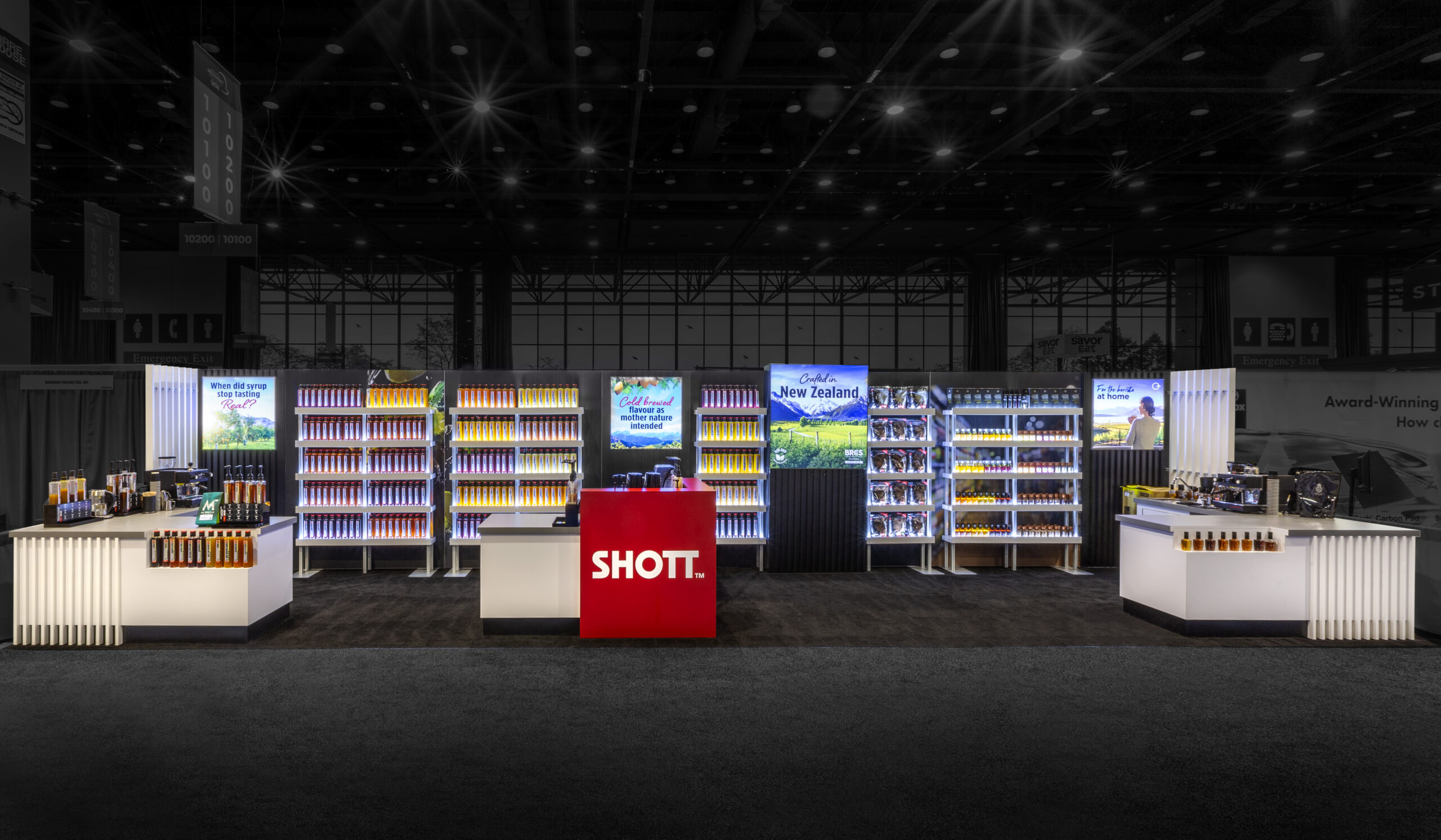
2. SHOTT Beverages Branded Trade Show Display
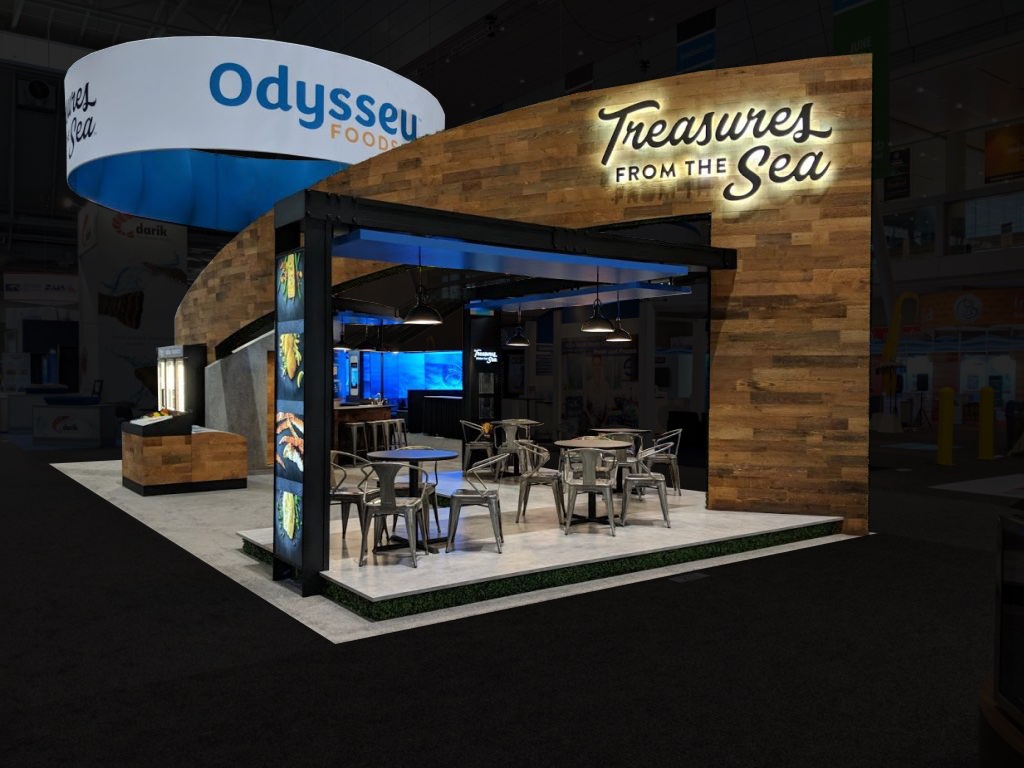
3. Odyssey Custom Display
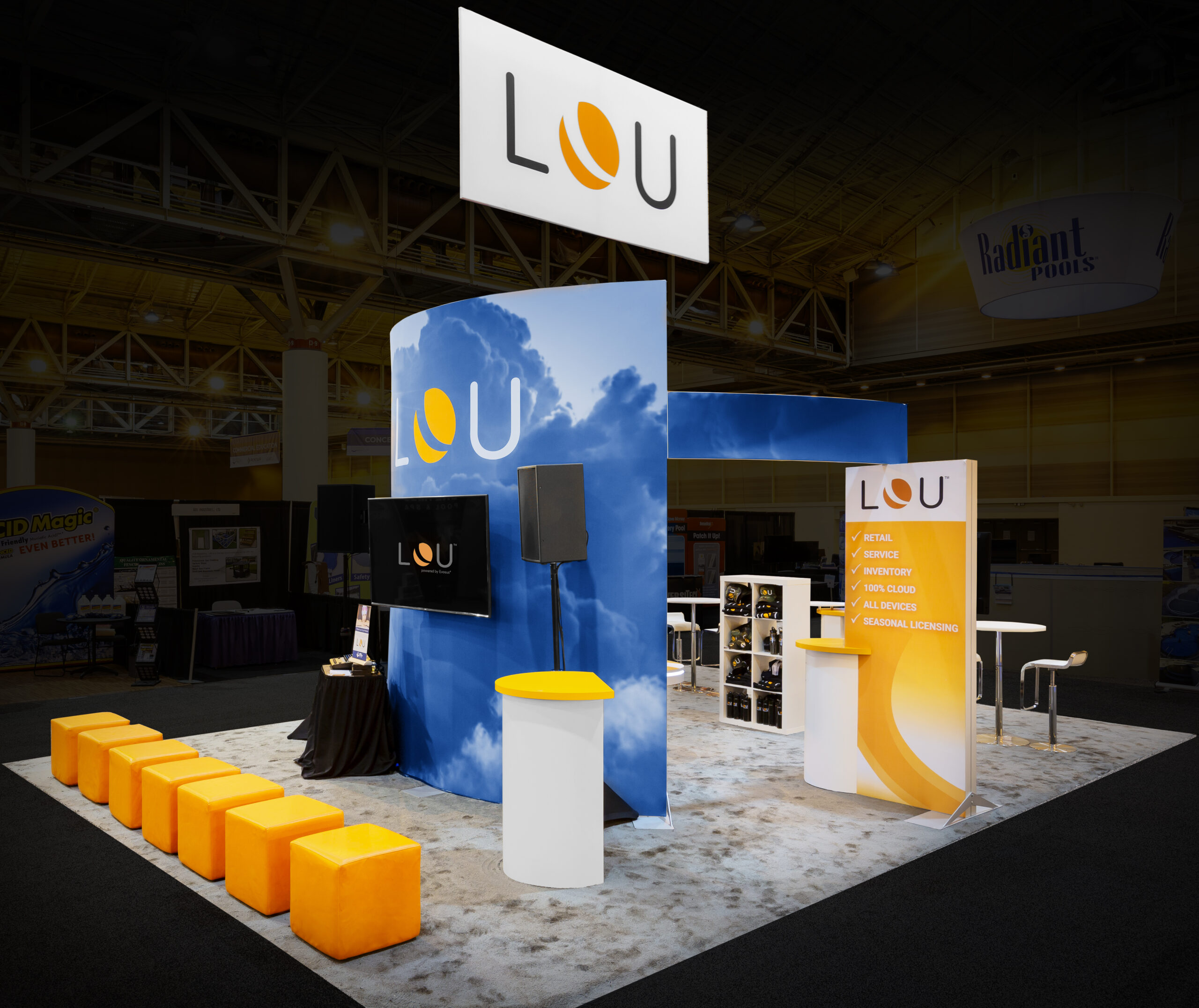
4. Evosus Custom Exhibit Fabrication
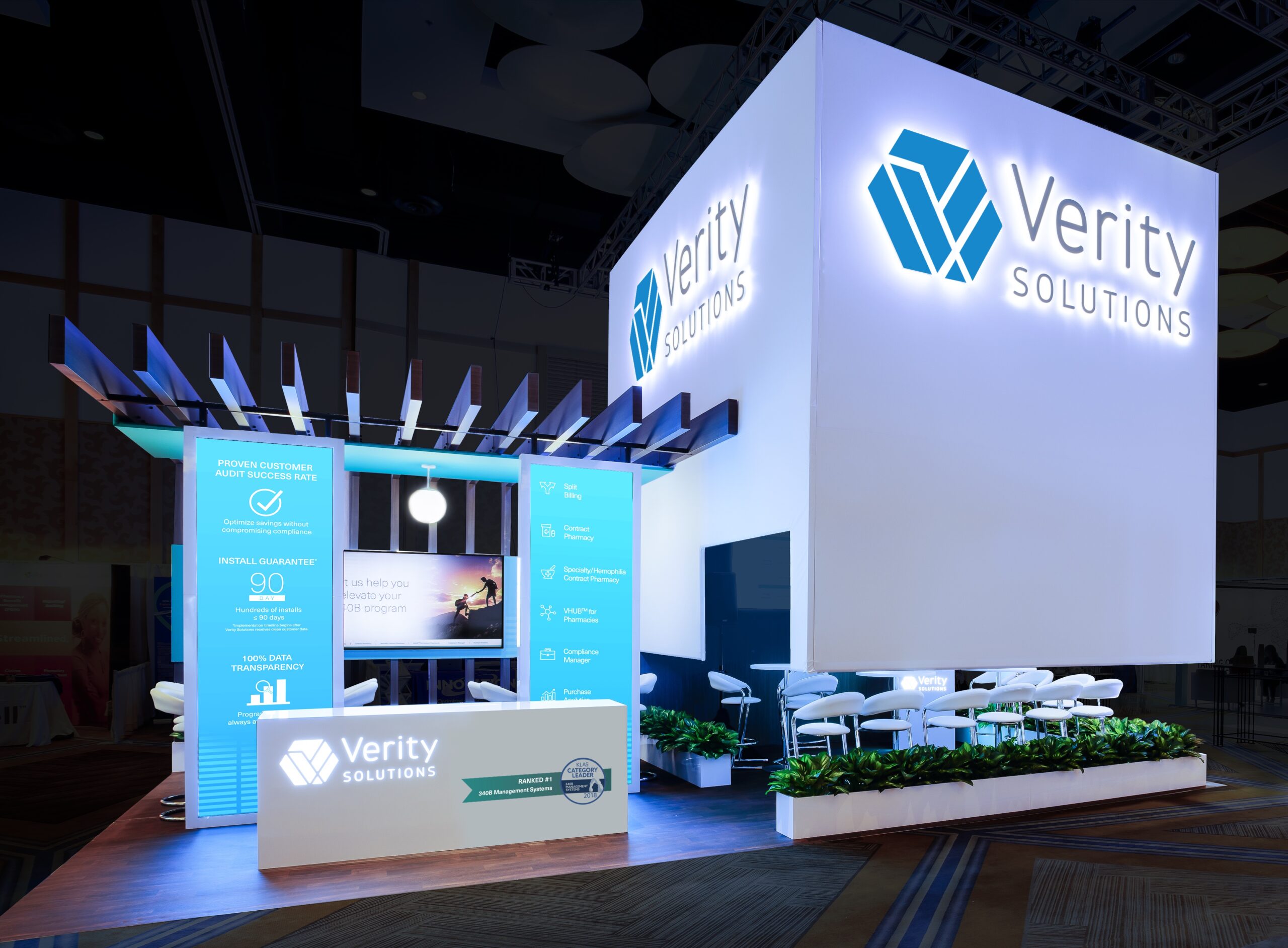
5. Verity Custom Trade Show Design
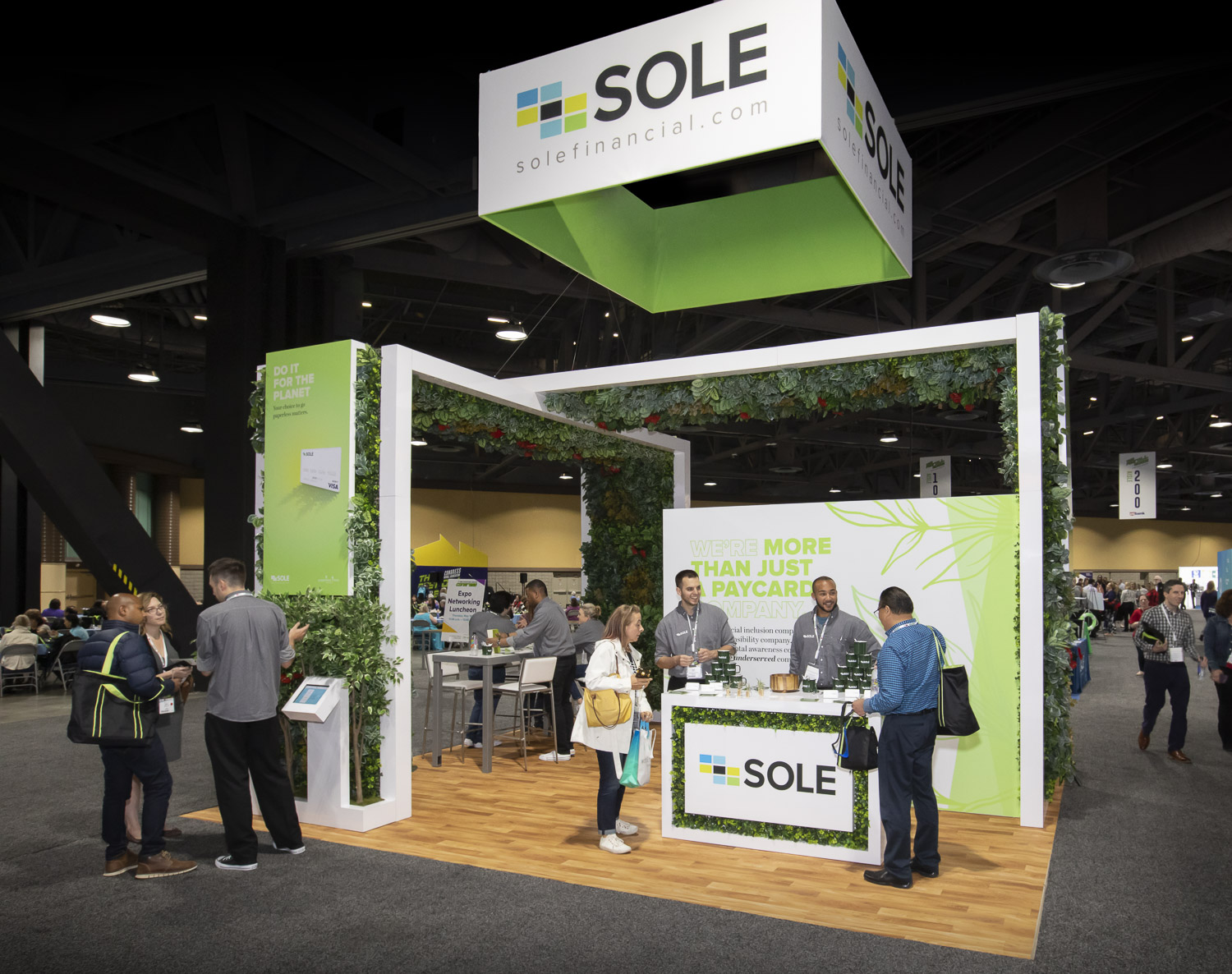
6. Sole Custom Display
Custom Modular Exhibits for Events of Any Size
Modular is a hot buzzword in trade show exhibit design. But exactly what does it mean? As trade shows and events have gotten more expensive, exhibitors want cost-effective display solutions that are more than a “one trick pony.” They want designs that are flexible, allowing them to reconfigure the exhibit components into different designs and sizes.
Modular and custom can work hand-in-hand if the exhibit designer understands your trade show goals. And while most custom wood exhibits can be reconfigured, most designers are leaning toward aluminum modular wall panels. These are lighter, more durable, and easier to install than wood panels. Moreover, they can be incorporated into traditional wood fabrication so the client benefits from the best of both traditional wood construction and modular aluminum panels.
In addition, modular wall systems, like Gravitee One-Step, use far less space in a crate and can be stacked to prevent damage during shipping. Exhibitors need fewer crates, saving on shipping and drayage expenses, and storage costs at your exhibit house are lower.
If “modular” appeals to you, then consider a rental exhibit. Many exhibit houses have both the inventory and the design DNA to create custom rentals for their clients. Custom rentals are typically less expensive and allow exhibitors to embrace a more flexible and modular approach to their trade show schedule. With a rental, they can customize the design to match a company’s targeted strategy for a show. In addition, they can seamlessly shift from an island to an inline to a peninsula.
A custom modular exhibit bridges the gap between high-end design and practical efficiency. This adaptability makes it a cost-effective and sustainable choice for frequent exhibitors.
Custom Trade Show Design Mistakes to Avoid
- Designing smaller / multiple configurations with the same properties. While this may seem like a wise investment, it can backfire when exhibitors focus on the “modularity” vs. the design goals. Design compromises may limit the impact of the primary exhibit and increase costs. Purchasing a separate, smaller exhibit for those space needs is often a better long-term choice both financially and for show flexibility.
- Storage. Exhibitors often underestimate how much lockable storage they’ll need in the booth, both inlines and islands. There’s more than you think:
- Computers, electronics, and lighting supplies
- Promotional products (giveaways)
- Literature
- Personal items, like coats, briefcases, purses, shoes, and items you’ve gathered during the show.
- Cleaning products, like a vacuum, duster, and/or glass cleaners.
- Emergency supplies, like tools, Velcro, fabric cleaner, and duct tape
- Food and drinks for the booth staff and guests
- Focus on what’s important. We are all guilty of this. There’s a lot to share at a trade show. Instead, focus on creating a clean, memorable design with easily digestible messaging. A good display should engage attendees and prompt conversations. A trade show exhibit isn’t a website with multiple menus, submenus, an About Us page, and a searchable database. Think of it as the billboard that catches your eye as you drive to work and compels you to take action as a result.
Who Should Invest in Custom Exhibits?
Investing in a custom trade show exhibit is the difference between renting an apartment and building a new home. While modular options are efficient, a fully custom build is a strategic powerhouse designed to solve specific business challenges that off-the-shelf solutions simply can’t touch.
Here is why a custom exhibit may be the ideal investment for your brand:
- Maximum Brand Authority: In a sea of pipe-and-drape or “cookie-cutter” booths, a custom design acts as a physical manifestation of your brand’s DNA. Every texture, lighting angle, and structural curve is engineered to reinforce your identity. This uniqueness creates “stopping power,” ensuring that high-value prospects notice you before they see your competitors.
- Optimize Your Strategy: Unlike standard kits, a custom exhibit is designed around your specific sales and client requirements. Need a private lounge for closing six-figure deals? A theater for live demos? A hidden storage room for inventory? Custom builds optimize every square inch for your team’s workflow.
- Seamless Tech Integration: Custom exhibits allow for flawless integration of technology—think recessed LED video walls, interactive touch tables, or VR stations. This creates a seamless feel that suggests sophistication and stability.
- Long-Term Financial Benefits: While the upfront cost is higher, a custom exhibit is often built with durable, premium materials designed for a multi-year lifespan. Plus, as mentioned before, smart designers can build in modularity for smaller or larger shows.
- Psychological Edge; There is an automatic “prestige factor” associated with custom builds. It signals that your company is a market leader with the resources to invest in excellence. This builds immediate trust with new leads and reassures existing clients of your company’s health.
Bring Your Brand to Life with Custom Exhibits from Exhibits NW!
At Exhibits Northwest, we specialize in crafting tailor-made trade show exhibits that perfectly represent your brand. With over three decades of experience and a track record of thousands of successful custom projects, we know just how to make your custom trade show booth stand out from the crowd and attract attention. Our team of expert designers and fabricators will leverage the latest technology and materials to ensure every detail of your trade show display is on-brand, from the layout and foundation to the graphics and finishing touches.
Experience the Exhibits Northwest difference today!
FAQs About Custom Exhibits
How long does a custom exhibit typically last with regular use?
The term “last” can mean multiple things. No custom booth will last forever. Trade show I&D and shipping can be hard on any exhibit. But with secure packaging, a custom trade show exhibit should last 3-5 years. A long-term ENW client has had a variation of the same booth for 12 years. More likely however, marketing decisions will determine whether it’s time to retire a custom exhibit, even if the “bones” of the exhibit are still healthy.
Can custom exhibits be reused or updated for future trade shows?
Yes. In fact, most exhibitors will update their graphics for each show or marketing campaign. However, custom is custom for a reason. It’s a bespoke design. That can limit how much can be updated. Sometimes, it’s less expensive to build a new exhibit than to turn a Georgia mansion into an English Castle.
Are custom exhibits suitable for international trade shows and shipping?
Yes and no. While a custom exhibit can be built anywhere in the world, each region has specific trade show guidelines and build requirements. It rarely makes sense to have a custom exhibit built in Chicago for a show in Shanghai. There will be fewer unexpected surprises.
How far in advance should a custom exhibit be planned before an event?
At least six months. While it doesn’t take six months to build a custom exhibit, it can take several months to finalize a design. Plus, there are always going to be changes, and a longer lead time allows some flexibility. Finally, trade shows have a predictable schedule, meaning there are always more trade shows in Q1 and Q3 than in Q2 and Q4. Exhibit houses have more flexibility during the slower months leading up to the busy season.