


Marketing is marketing. Whether it’s B2B or B2B. Let’s not forget enterprise, SaaS, direct, inside, and retail marketing. All these models differ by target audience, sales cycle length, and complexity, with B2B often requiring long-term relationship management and multiple stakeholders, while B2C focuses on fast, emotional, and transactional purchases.
But what about B2B trade show marketing? Is it the same as any other marketing or does it require a specialized strategy? To answer those questions requires an understanding of today’s trade show environment. Trade shows are much like bullion cubes. They’re concentrated and intense. The right one will add flavor but too much, too little, or the wrong one will ruin the dish.
Too many marketers assume the same strategies that work for online and print marketing will be equally effective at a trade show. Sadly, the marketing rinse and repeat approach almost always fails when applied to pre-show, show, and post-show marketing. No one will dispute that digital marketing continues to grow, but in-person events still play a critical role in building relationships, generating leads, and driving sales. Maximizing those opportunities requires a targeted, strategic approach to individual trade shows.
What Is B2B Trade Show Marketing and Why It Matters
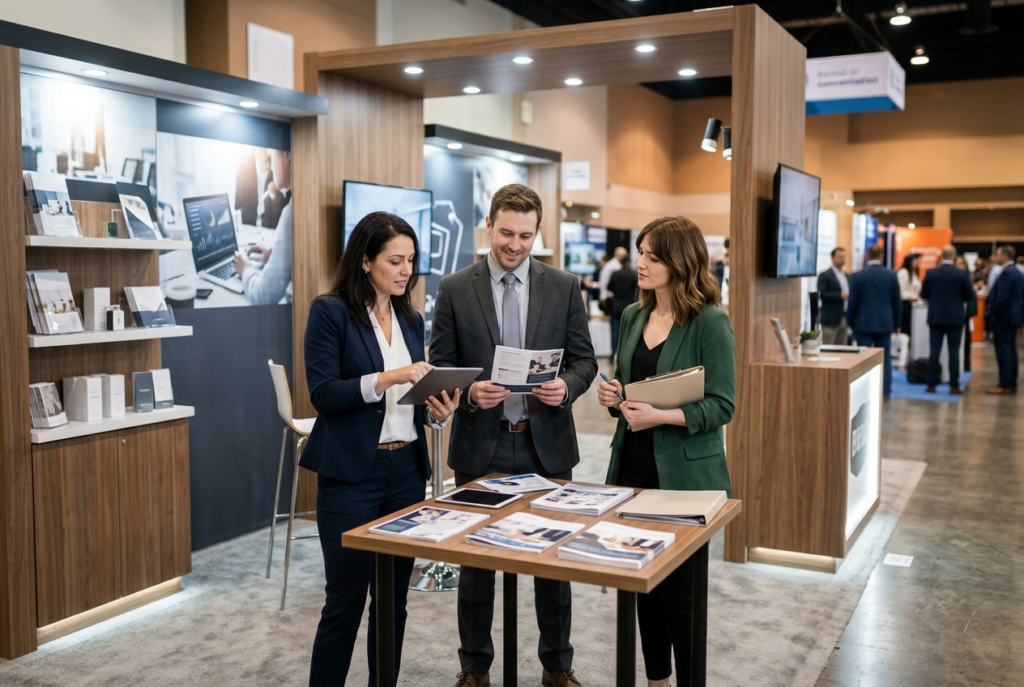
B2B Trade Show Marketing is where companies showcase their products or services to other businesses within a specific industry. Unlike consumer-facing fairs, these events are professional environments designed for networking, lead generation, and high-level deal-making. They’re rarely transactional. Instead they’re driven by attracting new and existing clients, creating “effective” engagement at the show, and follow-up with qualified leads after the event.
Marketing isn’t just about having a booth; it’s a comprehensive process involving:
- Exhibit Design: Creating a physical space that reflects brand identity and facilitates conversation.
- Interactive Engagement: Using technology like AR/VR, live demonstrations, or interactive games to attract traffic and educate attendees. .
- Strategic Outreach: Pre-show and post-show campaigns to ensure the right decision-makers visit the exhibit.
Why Are Trade Shows So Popular for B2B Marketing?
B2B trade shows are popular for B2B marketing for four critical reasons:
- High-Value Lead Generation
Trade shows bring industry professionals together in one place. These attendees are often “qualified leads”—people actively looking for solutions, making them far more likely to convert than a cold contact.
- The Power of Face-to-Face Interaction
In the B2B world, trust is the primary currency. Meeting a potential partner in person, shaking hands, and having a real-time conversation builds rapport in a way that emails and video calls simply cannot.
- Competitor and Market Intelligence
Trade shows serve as a live “state of the industry.” They allow companies to see what competitors are launching, identify emerging trends and technologies, and gauge customer reactions to new ideas in real-time.
- Shortened Sales Cycles
B2B sales often take months of back-and-forth. At a trade show, you can move a prospect from “initial awareness” to “detailed technical demonstration” in thirty minutes, significantly accelerating the path to a closed deal.
Face-to-Face Interaction Drives Stronger Business Relationships
While digital marketing offers convenience, face-to-face interaction remains the “platinum standard” for building business relationships. In a high-stakes B2B environment, the physical presence of a vendor partner acts as a powerful catalyst for trust and long-term collaboration.
Trust Is Built Faster In Person
You called. You emailed. You even mailed a package with information. No response. But now the industry trade show is just around the corner and that elusive prospect has agreed to meet with you in your booth. What changed?
Choosing new suppliers is scary for any business. And great suppliers are more than just vendors. They’re partners. Meeting face-to-face at a trade show allows the prospect to assess your products and services and, more importantly, to determine if there’s a solid connection. Not only will you do what you say but will you do more than that when they need a solution or advice. No one wants to get married to a supplier without establishing a foundation of trust.
Better Understanding of Buyer Needs
Sales and marketing shouldn’t exist in an information vacuum. And yet, marketers often rely on guesswork to determine what their clients need. Trade shows put them in direct contact with those clients. An effective trade show program is built on the exchange of ideas. Companies share their latest products and services and potential, and existing clients tell them what they need and where the market is headed. Great trade show marketers create opportunities to listen to customers, whether it’s in the booth, during scheduled meetings, or at social events. Then they document, organize, and share those conversations with the organization. This leads to more qualified opportunities and better sales outcomes.
High-Quality Lead Generation at Trade Shows
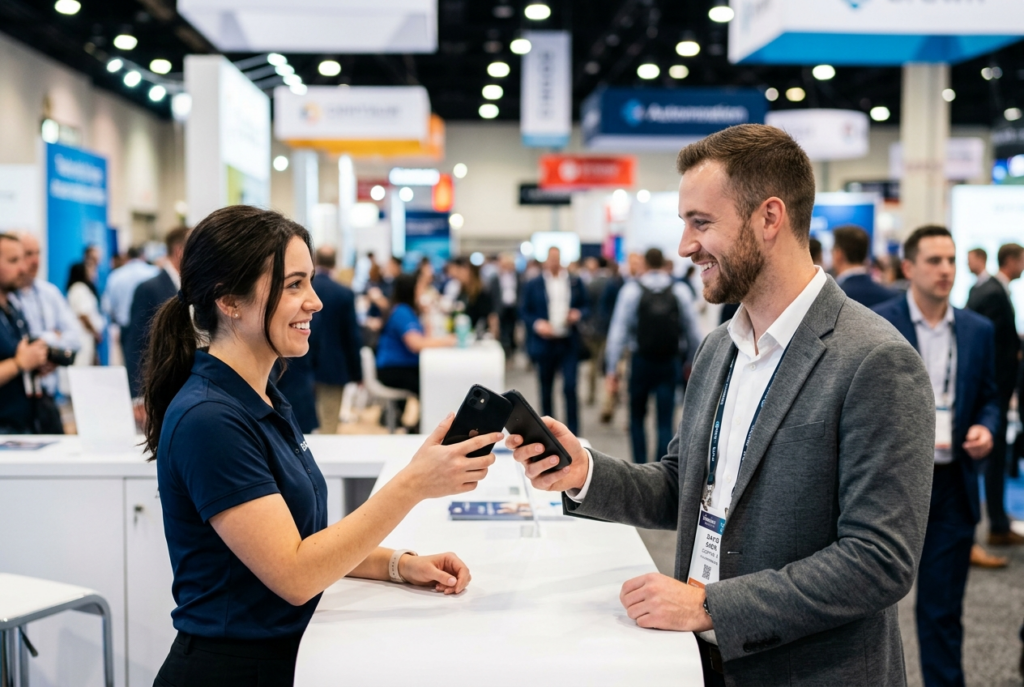
Generating high-quality leads at a trade show requires moving past the “fishbowl for business cards” approach. In a high-stakes B2B environment, the goal is to filter for intent and authority while the prospect is still standing in your booth.
Here is how to transform a high-traffic exhibit into a high-quality lead machine:
- Integrated Lead Capture & Qualification: Don’t just scan badges; qualify them on the spot. Use mobile lead retrieval apps integrated with your CRM to add custom qualifiers. : Train staff to identify Budget, Authority, and Timeline within minutes.
- High-Tech Drivers: Technology should serve as a conversation starter, not just eye candy. For example, interactive kiosks and AR/AV demonstrations allow visitors to self-select their pain points and provide you with data on what specifically interests them.
- Engagement Appointments: Sometimes the best leads come from structured appointments. Schedule specific times for your lead engineers or product designers to be available. Promoting these consultation slots pre-show attracts serious buyers looking for technical answers.
- The Fast Follow-Up: The quality of a lead degrades the moment they leave the convention center. For “Hot” leads schedule a discovery call within 48 hours of the show’s conclusion.
By treating the trade show floor as a dynamic laboratory for relationship-building rather than just a sales gallery, companies can transform their presence from a mere line item on the budget into a powerful engine for long-term growth. Success isn’t just about showing up; it’s about being the most helpful, memorable, and accessible resource in the room.
Competitive Insights and Market Research
Have you ever wanted to be a spy? Of course you have. In the competitive marketplace of a trade show, everyone is an agent engaging in covert espionage. You’re learning about your competitors’ latest products and services (and vice versa) and hearing from “sources” about the trends and industry insider information.
Trade shows provide a rare, unedited look at your industry’s marketplace. Beyond the glitz of the booths, these events serve as concentrated hubs for Competitive Intelligence (CI) and Market Research that digital tools simply cannot replicate.
Competitive Intelligence: A trade show floor allows you to perform a 360-degree audit of your competitors in a single afternoon.
- Messaging: Observe their headline messaging. What pain points are they prioritizing this year? If three major rivals have pivoted their messaging toward “Sustainability” or “AI Integration,” you’re seeing a real-time shift in the industry’s center of gravity.
- Product Benchmarking: Take advantage of live demos. You can see exactly how a competitor’s interface looks, how fast their machinery runs, or how their sales team handles “awkward” technical questions.
- Staffing & Culture: Observe their team. Are they overstaffed with junior reps or led by senior executives? High-level presence often signals a major announcement or a push into a new vertical.
- The Last Day Strategy: Senior leadership often leaves after the first 48 hours. On the final day, junior staff—who are often more candid and less likely to recognize rivals—may provide deeper insights into product roadmaps or recent internal shifts.
Market Research: Trade shows act as a massive focus group where you can validate (or debunk) your current strategy.
- The Echo Chamber: Listen to the complaints and questions attendees bring to your booth. If you hear the same “struggle” repeated by ten different prospects, you’ve just identified a gap in the market that your next product update should solve.
- Sentiment Analysis: Pay attention to which parts of your display people gravitate to.If visitors skip your high-tech demo but spend twenty minutes looking at a simple technical schematic, your market is signaling a preference for clarity over spectacle.
The most valuable data at a trade show isn’t what your competitors say about themselves in their brochures. You can learn almost everything you need by simply standing near a competitor’s booth and observing their public presentations, or by listening to what their customers say about them in the hallways between sessions.
Measuring ROI from B2B Trade Show Marketing
At some point, your company’s CEO or CFO will ask for your trade show ROI or Return on Investment. The results should be easy to report if you captured measurable data. ROI, as a general term, can be just about anything you choose as long as it measures your trade show costs vs. your trade show results. All that seems simple enough… but in real life, it’s rarely that easy.
Trade show marketers have historically struggled to quantify the results of their exhibition program because connecting sales with trade show marketing is rarely straightforward. Did Customer A purchase the software package because they visited your booth at Show XYZ or was it the result of a print ad, a salesperson presentation, or because your competitor’s product was too expensive or because they botched their pitch or because the client didn’t like the color red in their logo. Who knows?
Not straightforward, however, doesn’t mean impossible when it comes to measuring your trade show ROI. Just about any quantifiable measurement, if done with intent and accuracy, can be a useful tool for analyzing your strategy and providing insights into your future trade show marketing goals.
How to Measure Trade Show Effectiveness
Let’s start by taking a high-level approach to measuring trade show effectiveness. First, identify what measurements are important to your company and to your marketing program. Not every company has the same goals. Measuring trade show effectiveness goes beyond just counting brochures handed out. It’s an analysis of various factors to understand if the show met your goals. Here’s a breakdown of several key metrics to track and how they contribute to the bigger picture:
Leads and Sales:
- Leads Generated: This is the number of potential customers you connected with at the show. Track the quantity, but also qualify the leads – are they the right fit for your business?
- Cost Per Lead: Divide your total trade show expense by the number of leads to understand the acquisition cost per lead.
- Sales Conversion Rate: Track how many leads from the show convert into paying customers. This helps assess the quality of leads generated. This method requires both discipline and the cooperation of the sales and marketing departments.
Engagement and Brand Awareness:
- Booth Traffic: Monitor the number of visitors to your booth. A high number indicates a strong interest in what you offer.
- Social Media Engagement: Track social media mentions, reach, and engagement (likes, comments, shares) around the show. This reflects the brand awareness generated.
- Media Coverage: Measure the number of media mentions (articles, interviews) you receive during or after the show.
Additional Considerations:
- Set Goals: Before the show, define Specific, Measurable, Achievable, Relevant, and Time-bound goals for your participation. This helps tailor metrics to track progress.
- Pre and Post-Show Efforts: Track pre-show registrations and meetings booked, and follow up with leads after the show. This shows the complete lifecycle of a trade show lead.
- Customer Interactions: Measure the quality of interactions with existing customers at the show.
By analyzing these metrics, you gain valuable insights into what worked well and what needs improvement for future shows. This allows you to refine your trade show strategy and maximize your return on investment. With professional trade show management, these tasks become more streamlined and effective, ensuring that every aspect of your trade show participation is optimized for success.

How Exhibits Northwest Supports Your Trade Show Marketing Strategy
Trade shows are scary and confusing, especially for anyone new to exhibition marketing. Getting up to speed can be challenging, and there are always surprises which can be expensive. Experienced exhibit professionals know how to navigate the trade show landmines. They’ve lost a few metaphorical fingers along the way and want to save you from that trauma.
Exhibits Northwest is a full-service trade show partner. They start by understanding your trade show goals and assist you with creating a solid trade show strategy. That’s crucial because everything else should support your strategy including designing an exhibit, creating a budget, identifying a trade show schedule, and working through the minutia of ordering show services and handling logistics.
Because a streamlined, stress-free experience from planning through post-show execution means you can focus on marketing.
Conclusion
The professionals at Exhibits Northwest have assisted thousands of clients with creating and refining their trade show strategies. You can rely on their professional trade show management services.
With over twenty years of experience designing, building, shipping, and storing trade show displays, the ENW team can assist you with the nuances and complexity of trade show marketing. And if you want your new exhibit to impress trade show attendees and draw crowds to your booth, then we’ve got that covered too. Contact ENW today for a complimentary consultation and trade show marketing review.