


Augmented Reality (AR) overlays digital information (such as 3D models, videos, graphics, or text) onto the real world. Unlike Virtual Reality (VR), which creates a fully immersive, computer-generated world, AR simply enhances the user’s view of their actual surroundings. The key to AR is that the user remains grounded in the real world while the virtual content appears to exist in the same space.
As trade shows have morphed into experiential events, AR use has increased. Exhibitors use it to increase engagement and to create memorable experiences. In addition, AR solves logistical and engagement challenges by turning static spaces into interactive booths.
10 Augmented Reality Trade Show Ideas That Attract Crowds
What might seem like a wild augmented reality idea, probably isn’t. It’s probably been done before for a product, service, or company. Here are some ideas to get the creative juices flowing and then work with your Exhibits Northwest representative to fine-tune the concept for your trade show :
- Exploded View: Using AR, let attendees virtually disassemble a product. They’ll be able to see the components float apart and understand the product’s design and engineering.
- Wearables: Use an AR mirror to let attendees “try-on” clothing, eyewear, even cosmetics and capture each new look with a photo.
- Motion-Activated Arcade Game: Use a large screen and camera to trace a player’s body movements as they interact with an AR game. Like catching virtual icons or racing a mascot.
- Photo Booth: Attendees post for a photo with a famous virtual character, company, or athlete. The setup is easy and sharable on social media.
- Leaderboard: Integrate your AR games into a single, highly visible leaderboard visible on a large screen. The competition boosts interaction and attracts crowds.
- The Portal: Create a physical doorway that, when viewed through a phone, acts as a portable to a virtual environment, like your factory or a futuristic product setting.
- Wayfinding Guide: Create an app where attendees can use their phone to see virtual directional arrows or informational bubbles that guides them to locations in your booth or the trade show hall.
- Pepper’s Ghost: This technique allows you to create a virtual company spokesperson or industry expert as a hologram in the booth. Attendees can ask questions and see a realistic person respond.
- Geo-located Content: Place AR triggers in high-traffic areas of the show hall. When scanned, these triggers display mini-demos, entertaining animations, or surprising facts.
- Shared Experiences: In a group activation, multiple attendees can view and interact with the 3D model together. It promotes group discussion, teamwork, and a shared brand experience.
Augmented Reality (AR) can be a game-changer for trade shows because it turns a static booth into an interactive destination, dramatically increasing engagement and buzz.
Augmented Reality Trade Show Booth Experiences
An Augmented Reality trade show booth doesn’t have a single appearance. Instead, it’s about the integration of digital content into the physical space, which can range from minimalist to highly elaborate. The common thread is the clever use of technology to enhance or replace traditional display elements.
However, there are common features across AR booths:
- Branding & Graphics: Regardless of the type, the booth will still feature prominent branding, consistent color schemes, and high-quality graphics to establish identity.
- Charging Stations: Given the reliance on mobile devices, integrated charging stations are a practical must-have.
- Staffing: Knowledgeable staff are crucial to guide attendees, assist with the AR experiences, and convert engagement into leads.
- Clear Instructions: Simple, visual instructions on how to access and use the AR experiences (e.g., “Scan this QR code,” “Point your phone here”).
- Lead Capture Integration: Seamless ways to collect attendee information, often tied directly to the AR experience (e.g., “Email your virtual try-on photo” or “Enter your details to win after the AR game”).
Successful AR experiences at trade shows prioritize simplicity and relevance while designing it to be sharable. This increases the likelihood it will create a social media buzz and extend your visibility beyond the trade show floor.
Using Augmented Reality at Events to Tell Your Brand Story
Augmented reality is a powerful tool for transforming a static trade show booth into an immersive brand experience. The key is using AR to tell a story or demonstrate something that would be traditionally challenging or expensive to show on the show floor. However, technology for the sake of technology, while tempting, should be avoided. Any technology must support your overall trade show marketing goals.
Illustrate Complex Products. One of the most practical uses of AR at a trade show is to bring large or complex products to life by creating a virtual showroom. In this way, attendees can view product features, specifications, and videos. For example, some products are simply too large to show at a trade show like industrial equipment or too technical like medical devices.
Brand History. Your company’s history may be relevant to conveying the legacy, stability, innovation, and evolution of your products and services. Using a physical timeline, attendees can scan the timeline with their phone which launches short animations, historical archives, or stories about the founders and employees.
Interactive Challenges. Games keep attendees not only in your booth longer, but they also encourage multiple visits. Most can be personalized to match your theme and promote your marketing goals. Consider interactive games like Trivia, Spin to Win, Photo Booth, and Memory Match.
Projection Mapping for Immersive Brand Environments
Projection mapping is one of the most powerful “Wow Factor!” technologies at trade shows and events. Projection Mapping uses software and high-powered projectors to turn irregularly shaped objects or surfaces into video display canvases. Essentially, it is a way of creating a visual illusion where digital content appears to conform perfectly to a 3D physical object, transforming it into a “living” surface.
So, how can that technology be used on a trade show floor?
Dynamic Product Demonstration: Instead of a static display, projection mapping brings a product to life.
- An automotive company can project images onto a physical car, making the body panel appear transparent to reveal the internal engine or safety features in action.
- A machine or heavy equipment manufacturer can project animated infographics onto a smaller physical model, showing the machine’s intricate functions and stress points without needing to demonstrate the actual, full-size equipment.
Immersive Storytelling: Projection mapping can transform the architecture of the booth itself into a centerpiece.
- Booth walls can be mapped to create the illusion of a futuristic cityscape, a calming natural environment, or a dynamic interface, instantly setting the mood and reflecting the brand’s message.
- Projections can make the wall appear to crumble, open up, or spin, captivating passersby and drawing them in to see what is happening inside the booth.
- Text and logos can be projected onto custom-built 3D shapes (like large letters spelling the company name) to create a high-impact, constantly changing branded sculpture.
Projection mapping cuts through the visual clutter of a crowded trade show floor and ensures the brand’s content is recalled long after the event is over.
AR Scavenger Hunts That Encourage Exploration
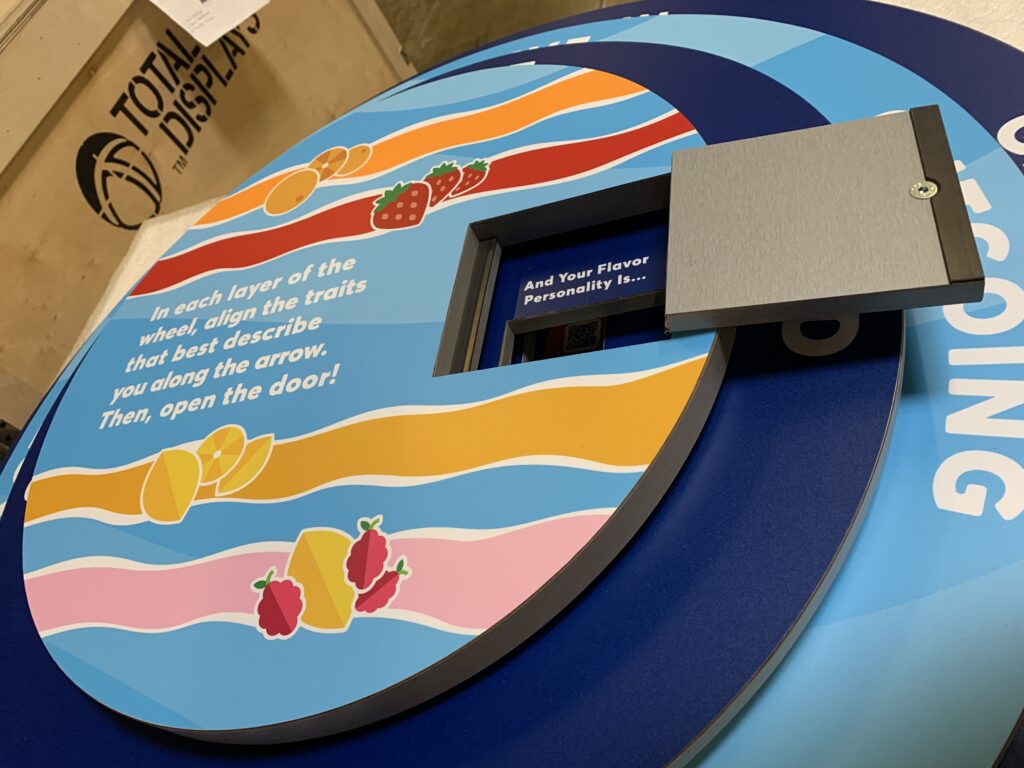
Everyone has a smartphone, which makes scavenger hunts easier than ever at a trade show or event. An AR scavenger hunt is a gamified, interactive experience using a mobile device. Participants move around the booth or the trade show floor scanning markers (like QR codes, logos, or images) to trigger virtual clues, 3D models, animated characters, or hidden information.
Once the participant completes the scavenger hunt, they are rewarded with a prize, entry into a raffle, or an exclusive discount code. Benefits to the exhibitor include greater engagement, product education, lead capture, buzz on the show floor, and traffic flow.
Examples:
- Missing Product Pieces: Attendees scan five posters in the booth. Each scan animates a “piece” of a new product, along with features. Once all scans are complete, a prize is awarded.
- Solution Code Challenge: The goal is to find a five-digit code to unlock a new software. Once they’ve collected the numbers, they enter it into a tablet to claim a live demo and a prize.
- Exploded View Product Demo: Instead of displaying large, heavy machinery, there are QR codes to smaller real-life components. Scanning the code places a life-size 3D model on the floor next to the attendee. They can then tap the screen to trigger an exploded view.
AR scavenger hunts transform a passive trade show visit into an active, immersive experience by overlaying digital content onto the real world. This boosts engagement, increases the time spent at a booth, and makes complex products easier to understand.
Augmented Reality in Retail Displays
Augmented reality in retail overlays digital content onto a user’s view of the world. The goal is to enhance the shopping experience by using a camera or screen and then projecting an interactive digital layer. This could be showing virtual products in a real-world setting like trying on clothing or glasses. Or creating an interactive story by transforming a product into an engaging story or mini-game.
Examples:
- Virtual Try-on Mirrors (VTO): Digital mirrors or displays allow attendees/shoppers to virtually try-on outfits and accessories without physically changing clothes.
- Hair Color Visualization: Attendees can virtually apply hair dyes or cuts to their live video feed before committing to a cut or hair color.
- Navigating and Wayfinding: Use a mobile device to navigate a store, factory, or landscape with AR overlays showing directions, specific products, or promotions.
At trade shows, AR creates a “Wow!” factor, attracting attendees into the booth. Once there, AR makes it easier to demonstrate their products and services without “physically” having their full assortment in the booth space. Finally, the interactive nature of AR increases the time attendees spend in the booth, thereby making it easier to quality leads and gather information.
AR Giveaways and Swag with a Digital Twist
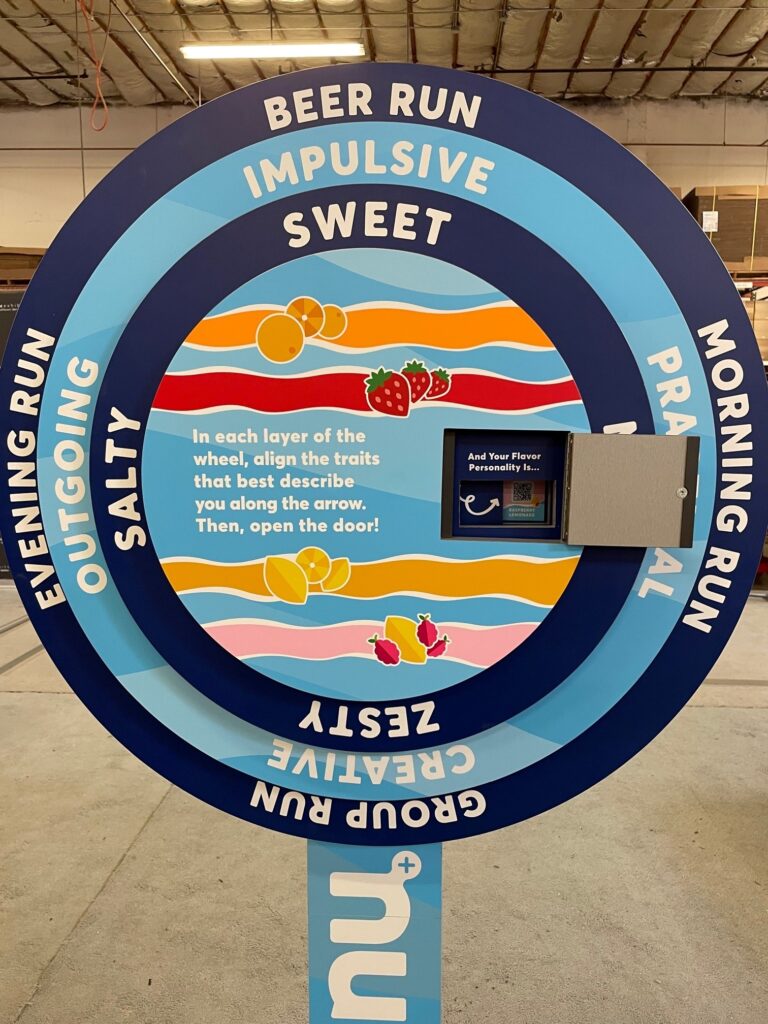
Giveaways are a trade show staple. But how do you ensure your giveaway is memorable and engaging? Consider giving it an AR twist. For best results, use web-based AR (WebAR) which works directly through a smartphone’s browser without requiring a dedicated app download. Simply link the QR code on your giveaway directly to the AR experience.
AR Giveaway ideas
- Business Card: Scanning the card launches a mini-demo of a the company or product.
- Trading or Collectible Cards: Like a scannable business card. This reveals animated mascots or characters or a special feature.
- T-shirts: Not just any t-shirt will do at a trade show. The logo on these t-shirts launches a social media filter, an animation, or access to a VIP section on your website
- Notebooks, Pens, and Lanyards: Turn a ho-hum giveaway into a scavenger hunt with scannable clues like a map or riddle on the giveaways.
- High-quality Catalogs: Scanning a product image in the catalog brings the image to life with a video, 3D model, or specifications sheet.
AR-enabled giveaways maximize memorability, drives engagement, simplifies complex demos, and enhances lead generation and qualification. In short, it transforms standard trade show swag into a measurable, engaging marketing asset.
Let’s Create Your Augmented Reality Trade Show Booth
Augmented reality can create engagement, memorability, and brand impact when used strategically in your trade show marketing program. But like many technologies, it can be a “shiny light” for exhibitors who want the latest and greatest but don’t know how to use it as an effective tool to attract and qualify attendees on the trade show floor.
At Exhibits Northwest, we’re “shiny light” experts and trade show marketing professionals. We will take the time to understand your marketing goals and then suggest strategies that maximize your success. And just like your business goals, those strategies may change depending on the trade show. We’ll be there at every step.
At Exhibits Northwest, we’ve been designing and fabricating exhibits for more than 20 years. More importantly, we’ve been partnering with companies to elevate their trade show marketing campaigns and guiding them through the hidden landmines of trade shows.
FAQs About Augmented Reality Trade Show Ideas & Booths
What are AR trade show ideas?
AR (augmented reality) trade show ideas are ways to use AR technology—like demos, games, or projections—to attract crowds and boost engagement.
How can an AR trade show booth stand out?
An augmented reality trade show booth stands out by offering interactive features such as AR product demos, scavenger hunts, or projection mapping.
Is AR in retail relevant to trade shows?
Yes. Augmented reality in retail, like virtual try-ons or interactive displays, can be adapted for trade shows to engage attendees.
What is the best way to use AR at events?
The best way to use AR at events is by connecting it to your brand story through demos, gamified experiences, or interactive booth spaces.
Still have questions? Contact our AR trade show experts for more ideas and information!