


Are Trade Shows Still Worth It in 2026?
Whether you’re new to trade show marketing or an exhibition expert, you may be asking yourself, “Are trade shows still worth it in 2026?” And the answer is… “It depends.” That shouldn’t surprise you. Trade shows are a perfect fit for companies launching new products or services, connecting with existing customers, searching for new clients, and generally trying to stay informed about industry trends and competitors.
Instead of asking if trade shows are still valuable in 2026, the question might be, “At Show XYZ, should I be an exhibitor or an attendee?” There are pros and cons to both and whether you attend or exhibit may depend on your marketing budget, your knowledge of an industry, or simply taking the first steps to investing in a trade show program.
If you haven’t been to a large professional trade show in a few years, you may be surprised at how much has changed. Trade shows have always been a testing ground for new technologies, like large LED monitors, backlit graphics, digital touchscreens, augmented reality, and interactive gaming. Attendees expect “experiences” that engage them. And savvy marketers have responded.
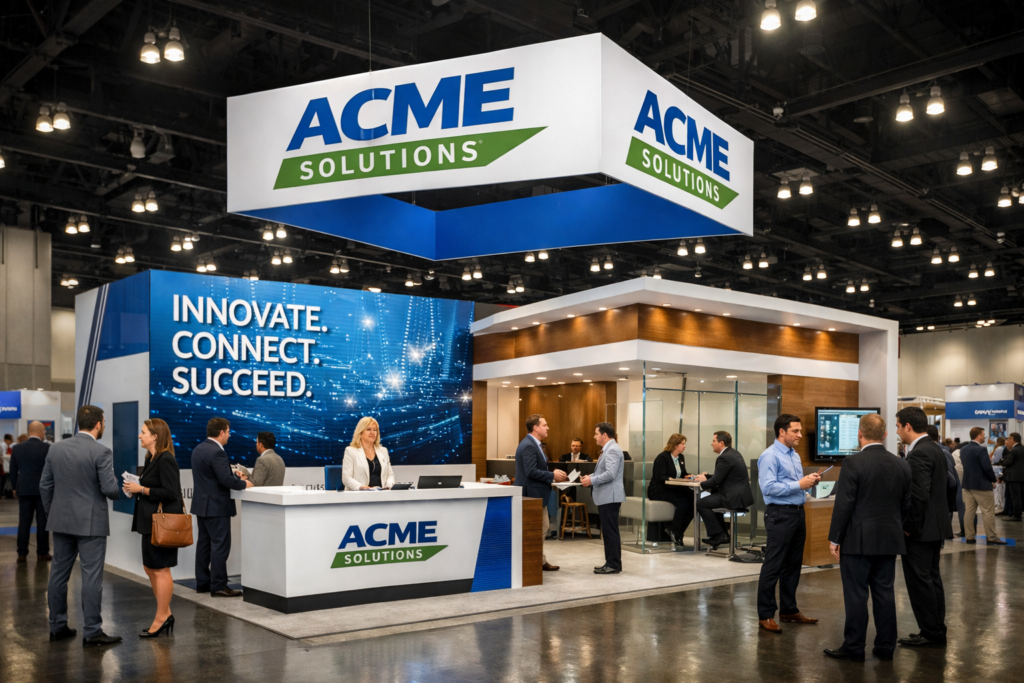
Why Businesses Are Questioning Trade Shows in 2026
Rising costs, tighter budgets, and more digital options have forced companies to take a hard look at their trade show program. For some companies, trade shows represent up to 30% of their annual marketing budget. As a result, senior management is demanding to know the Return on Investment on those expenses.
Historically, that’s been tough information to gather and compile. Sales activity at a trade show is rarely transparent and linear. A promising conversation with a potential at a HVAC convention in Las Vegas may not bear fruit for months, sometimes years. And linking the sale to a demo at 2 pm in a booth at 1:30 pm on a Tuesday may require a contortionist.
The competition for marketing dollars has never been greater. CMOs are being pushed to invest in digital channels while still maintaining their traditional marketing. All claim to have measurement tools, but those tools often obscure rather than reveal results, making it even harder to know where to invest. Trade shows and events are no exception. So, let’s take a deeper dive into the question, “Are trade shows still worth it in 2026?:”
Are Trade Shows Still Worth It in 2026?
The short answer is yes, but the how has changed. Trade shows are no longer about just showing up and handing out stress balls; they have evolved into high-stakes experiential events.
While total attendance is still roughly 12% below 2019 levels, the quality of attendees has never been higher. About 82% of people on the floor now have significant buying power or influence. Businesses aren’t sending their whole teams anymore; they’re sending the decision-makers.
Here is how the value proposition looks today:
- Exceptional ROI: For every $1 spent, the average return is now approximately $20.98.
- Cost Efficiency: A lead generated at a trade show costs roughly $112, compared to $259 for a traditional field sales call.
- Selective Participation: 46% of attendees now only visit one major show per year. If you aren’t at the right one, you miss them entirely.
However, trade shows are not an effective marketing option if:
- No Specific Goals: You go “just because we always go” without a specific lead-gen goal.
- Poor Messaging: You rely on “fishbowl” giveaways (attracts low-intent leads who just want a free iPad).
- Lack of Engagement: Your product or service can be fully understood through a 2D Zoom demo (2026 shows are for products that need to be felt, seen in 3D, or require high-trust relationships).
Benefits of Trade Shows for Companies in Today’s Market
For too long, trade shows were more about brand visibility than sales conversion. Exhibitors accepted questionable ROI when the costs were manageable. Not anymore. Because digital marketing has become incredibly noisy due to AI-generated content, many companies are shifting to trade shows and events. In short, they’re recognizing the “physical” as the most efficient way to promote their brand as “real” and trustworthy.
- Lead Quality & Cost Efficiency: While the upfront cost of a booth is high, the “cost per qualified lead” is often much lower than traditional field sales.
- Cost Advantage: The average cost per lead at a 2026 trade show is approximately $112, compared to $259 for a typical field sales call.
- Buying Power: Roughly 82% of attendees now have direct purchasing authority. You aren’t just scanning badges; you are talking to the people who sign the checks.
- Higher Conversion: Leads generated in person convert at a rate 3–5 times higher than digital leads because the initial trust-building happens on the floor.
- Authenticity Premium: In an era where half of all marketing content is AI-generated, physical presence has become a rare competitive advantage.
- Trust Acceleration: A single handshake or live demo can bypass months of “automated nurture” emails.
- Hands-on Validation: For 75% of buyers, hands-on demonstrations remain the most trusted way to evaluate a product before committing to a high-value contract.
- Brand Culture: Trade shows allow you to showcase your company’s “human element”—your expertise, professionalism, and responsiveness—which is impossible to replicate via a Zoom call.
- Market Intelligence: Exhibiting in 2026 serves as a live customer focus group and a competitor scouting opportunity. .
- Real-Time Feedback: You can launch a prototype and watch prospects’ genuine, unfiltered reactions, allowing you to pivot your product strategy in days rather than months.
- Competitor Benchmarking: It remains the most efficient way to see how your competitors are positioning themselves and where market gaps (the “unfilled niches”) currently exist.
- Efficiency: Trade shows function as a massive “time-machine” for your sales cycle. Three intense days meeting with clients and prospects vs. months of on site visits and calls sent to voicemail.
- Compressed Discovery: You can move a prospect from “never heard of you” to “requesting a quote” in a single afternoon.
- Meeting Density: You can meet with 20+ key clients in one location, saving thousands on airfare and months of individual scheduling.
- Pre-Qualified Intent: 45% of visitors only attend one show per year. If you are there, you have their undivided, high-intent attention for 5.5 hours on average.
The trade show industry has moved past the post-pandemic recovery phase and entered a new era of Strategic Maturity. While the total number of attendees has stabilized at slightly below 2019 levels, the economic value of those attendees has reached an all-time high.
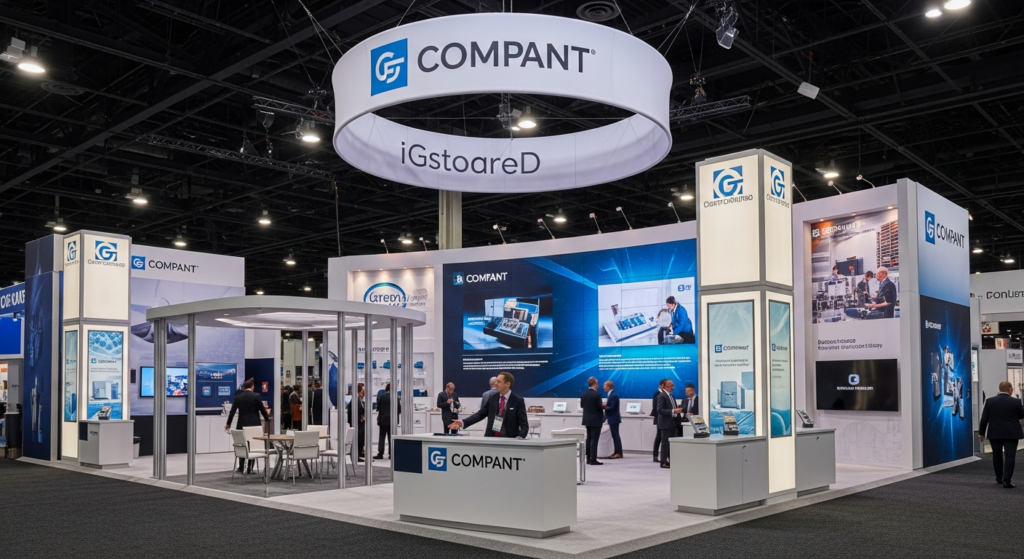
Trade Show Cost vs Benefit: What Companies Should Consider
In 2026, trade shows are increasingly viewed as a conversion tool rather than just a brand awareness expense. While upfront costs are rising, the return on investment (ROI) often outperforms traditional sales and digital channels when executed correctly.
For most exhibitors, a trade show is considered successful if it achieves a 5:1 ROI. In 2026, companies are reporting an average ROI of approximately $20.98 for every $1 spent, driven by the high quality of modern attendees.
| Trade Show Cost Category | What the Cost Includes | Business Benefit |
| Booth Design & Build | Exhibit design fees & purchase or rental cost | A booth customized to maximize the client’s goals & messaging |
| Booth Space | Cost of booth space | Access to a target audience |
| Shipping & Logistics | Shipping, drayage, storage | Peace-of-mind. No last minute surprises. |
| Staffing & Travel | Travel, lodging, & meals | Product/service experts who build trust with prospects |
| Onsite Labor Services | I&D labor, electrical, internet, flooring | Predictable (albeit expensive) onsite services |
| Misc. | Lead retrieval & rental furniture, gamification | Professional services, upscale furniture, & engagement tools |
What Makes a Trade Show Successful in 2026?
Strategy, planning, and implementation are the three legs of trade show stool. They matter more than the size of your booth. Without them, exhibitors are flushing their marketing dollars down the proverbial toilet. In 2026, the “casual trade show attendee” has largely disappeared—replaced by high-intent decision-makers.
Here is why planning and preparation are the literal “make or break” factors for an exhibitors ROI:
Pre-Show Planning That Drives Results
76% of attendees arrive with an agenda. If you aren’t on their calendar two weeks before the show, you are fighting for the remaining 24% of “floor wanderers.” Proper planning allows you to book your “must-have” meetings early. Without preparation, you’re left hoping someone “happens to walk by,” which is a high-risk gamble at $150+ per square foot of booth space.
Trade shows are likely your most expensive marketing line item. Planning ensures that every dollar has a job. Your booth staff shouldn’t just be “friendly”; they need to be technical experts. Preparation ensures your team can handle the high-level queries of the 82% of attendees who have buying power.
Logistics Efficiency: Shipping and drayage costs have climbed. Early planning (6–9 months out) allows for modular, lightweight booth designs that slash transport costs and setup times.
On-Site Execution and Post-Show Readiness
A bowl of candy doesn’t cut it anymore. 2026 buyers expect an experience they can’t get on a Zoom call. Preparation is required to prepare interactive demos or gamification with your physical products. Well-planned booths are designed for “flow”—moving a prospect from a public “hook” to a semi-private “conversation zone” seamlessly.
The show doesn’t end when the crates are packed. Preparation dictates how you handle the data you’ve gathered. Specific qualifying questions allow your CRM to automatically rank leads by “heat.” Without a personalized follow-up sequence, sales leads will go cold before you even fly home.
Why Companies Choose Exhibits Northwest for Trade Show Success
Whether you’re new to trade show marketing or an exhibition expert, the learning curve never ends. Trade shows are evolving and attracting attendees is a moving target, not only how to design an effective trade show booth but also how to integrate the latest technology.
At Exhibits Northwest, we’ve been designing and fabricating exhibits for more than 20 years. More importantly, we’ve been partnering with companies to elevate their trade show marketing campaigns and guiding them through the hidden landmines of trade shows. Our experience means exhibitors can focus on what they do best – positioning their brand from maximum success – without the stress of logistics, show services, and storage.
FAQs About Trade Shows
How can small businesses make trade shows more cost-effective in 2026?
Smaller businesses have an advantage – nimble marketing. They don’t have to have the largest booth or invest in a show sponsorship or even the latest augmented reality. Their goal should be to create curiosity so attendees can’t resist visiting their booth. The most cost-effective trade show marketing is the one with the highest ROI. Planning and execution will always be more important than the size of your budget.
Are virtual or hybrid trade shows a good alternative to in-person events?
They can be, but it depends on your objectives. In the end, face-to-face marketing will result in the highest return on your investment. In other words, virtual or hybrid trade shows shouldn’t replace traditional in-person events but should augment them.
What metrics should I track to know if a trade show was successful?
Before you focus on the metrics, you should set goals and a strategy. Those will serve as the base for the metrics you want to measure. Keep in mind that metrics can be quantitative or qualitative. It’s not just about how many attendees visit your booth but the quality of the attendees who want more information. Finally, the single biggest mistake exhibitors make is setting metric goals and then not following their plan once the show starts. Measurement requires good data and good data requires the discipline to gather it effectively.
Can trade shows help improve relationships with existing clients, not just find new leads?
Both existing and prospective clients want to know “what’s new” and “what makes your product or service” compelling. The answers may be different depending on the client, but it’s just as important to have a story to share for the new or existing clients. Relationships neglected are relationships lost. Smart exhibitors invite clients to the booth and take the time to welcome and educate them on “what’s new” or “what can we do better.”