


Your trade show exhibit was amazing! The graphics were stunning, the floorplan optimized for traffic flow, and the events and giveaways were clever and engaging. And yet, as you review your post show metrics, the show was only marginally successful. What went wrong?
Sadly, even the most impressive exhibit cannot compensate for an unprepared booth team. Your staff behavior directly influences whether attendees stop, engage, and become qualified leads. Far too many exhibitors take booth staff preparation for granted. They round up the sales team, give them a quick tour of the booth, and then tell them to sell. But there’s no training, no gameplan, and zero communication throughout the show about what’s working and not working.
In this article, we’ll review staff selection, pre-show preparation, attendee engagement, qualification, booth etiquette, lead capture, and follow-up.
Key Takeaways
- Think outside the box when choosing your booth staff
- Your objectives will dictate your booth staff size
- Staffing is about who’s valuable at the trade show
- The best booth teams understand their roles
- You’ll make mistakes. That’s OK. The key is to address them quickly
Choose the Right People for Your Trade Show Booth
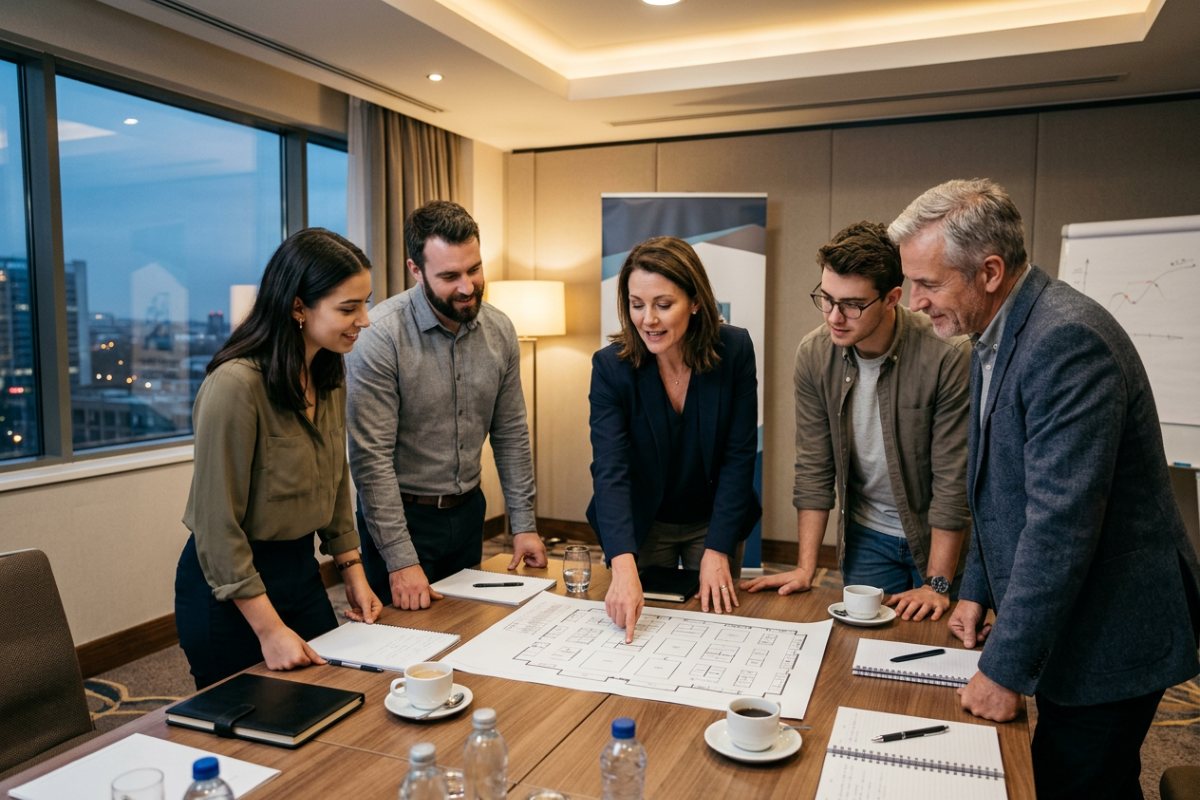
Nearly every trade show booth has a Joe or a Jane. They’re successful salespeople, but they view the annual trade show as a vacation. They don’t pay attention during pre-show training. They arrive at the booth minutes before the show opens. They chat with friends or clients and remain oblivious to the traffic in the booth. And just when you need them the most, they disappear for an hour or more.
Choosing the right people for your trade show booth isn’t easy. The stars in the office may not automatically be the best booth representatives. And that includes senior management. When selecting your booth staff, start by prioritizing communication skills, product knowledge, energy, approachability, and the ability to listen. This often includes a mix of sales, marketing, technical, product, and leadership personnel. Each one has a different set of skills to support attendee needs. In larger booths, take the time to define everyone’s roles before the show begins so they know and understand their responsibilities.
Build a Balanced Booth Team
| Staff Role | Primary Responsibility |
|---|---|
| Greeter | Welcomes attendees and starts conversations |
| Qualifier | Determines needs, fit, and buying intent |
| Product expert | Handles technical or detailed questions |
| Sales representative | Advances qualified conversations |
| Meeting coordinator | Schedules demos or follow-up meetings |
| Team lead | Manages coverage, performance, and issues |
Train Staff on Your Goals Before the Show
Every exhibitor wants to increase their sales but how to achieve that objective varies. Some exhibitors want a crowded booth with hundreds if not thousands of attendees over the three days of the show. They’ll have giveaways, games, and contests. Done well, they’ll leave the show with a healthy list of qualified prospects for the Sales Team.
Others may only be on the hunt for 3-4 new clients. Their pre-show marketing will be very targeted, and while their booth may not have massive crowds, they may meet their objectives and be overjoyed by their success.
Begin your training with the key business objectives for this trade show. Explain what the company wants to accomplish and what qualifies as a successful interaction. Second, define measurable goals such as qualified leads, appointments, product demos, target-account conversations, or new opportunities. And thirdly, make sure every team member understands the ideal customer profile and the specific problems the company solves.
In the end, your objectives will dictate your booth size, your budget, your staffing choices, and your marketing. Your team should understand those objectives and how everyone contributes to meeting those objectives.
Teach Staff How to Approach Attendees
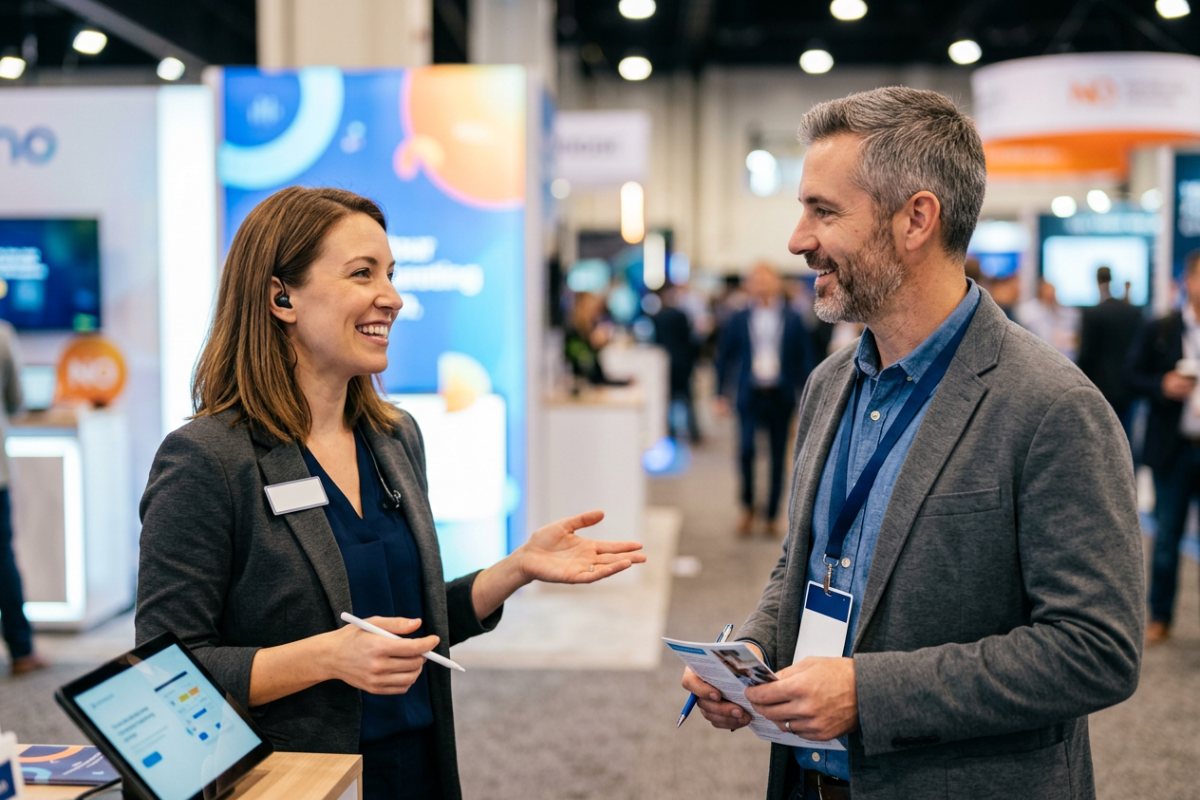
Staffing a trade show booth is 10% product knowledge and 90% behavior. Effective staff training focuses on body language, open-ended conversation starters, and strategic qualification.
- Body Language. Never block the booth. Stay focused on the traffic flow (vs. your phone, laptop, or colleagues). Establish eye contact and welcome them into the booth.
- Conversational Openers. Ask observational or situation open-ended questions. For example, instead of asking “How are you today?”, ask them “What’s the most interesting booth you’ve seen so far?”
- Engagement. Follow this sequence once an attendee stops at your booth. 1. Acknowledge. 2. Questions. Qualify.
- Disengagement. Don’t get stuck talking to a non-prospect. Learn how to gracefully exit from conversations.
- Feedback. Throughout the day compare notes with your fellow staffers. Limit shifts to 2-3 hours to avoid fatigue.
Finally, train your staff to quality leads. There’s a difference between collecting contact information and actually qualifying a lead. This includes determining an attendee’s needs, timeline, decision-making role, current solution, budget considerations, and desired outcome. Experienced exhibitors establish a shared definition of a hot, warm, and cold lead before the event.
Create a Simple Lead Qualification Framework
| Qualification Level | Typical Signals | Recommended Action |
|---|---|---|
| Hot | Clear need, strong fit, near-term buying intent | Schedule immediate follow-up |
| Warm | Relevant need but longer timeline | Nurture and schedule future contact |
| Cold | Limited fit or general interest | Add to appropriate marketing follow-up |
Everyone’s memory is fallible. And while everyone firmly believes they’ll remember the details of a conversation with a prospect, they won’t – even an hour or two later, let along 30 days after the event. Most lead retrieval systems now include talk to text so it’s easy to record important information after the prospect leaves the booth. Those notes allow the sales team to personalize their follow-up after the show and target the client’s specific needs.
Establish Trade Show Booth Staffing Guidelines
Staffing is only as complicated as you make it. Let your trade show objectives guide you when making decisions on who to bring and how to achieve those objectives.
Rule #1: Knowledge
Not every booth staffer needs to know everything. Collectively, however, the team needs to know everything and know who’s the expert about every subject. The expert should be able to answer questions about that topic, as well as explain the features and benefits of your products or services.
Rule #2: Goals
Set clear goals for your booth staff. What do you hope to achieve by participating in the trade show? Then provide your staff with training on your products or services. This should include a thorough overview of your offerings, as well as any recent updates or changes.
Rule #3: It’s Not Over Until It’s Over
Provide your staff with feedback throughout the training process. This will help them to identify areas where they need improvement and make sure that they are on track to achieve their goals. Pre- and post-show staff meetings keep the team focused on the goals and address any concerns.
Rule #4: Explore
It’s not just about what’s happening in the booth. Give them time to explore the show floor, check out competitors, discover new suppliers, and meet with attendees at social events.
Rule #5: Have Fun!
Attending a trade show should be fun, and trade show booth staff training should be a positive experience for everyone involved. Make sure to create a relaxed atmosphere where your staff can learn and grow.
The “Never Do This” Booth Checklist
| Avoid | Why It Hurts Your Booth |
|---|---|
| Looking at your phone | Signals disinterest |
| Eating at the front of the booth | Looks unprofessional |
| Sitting with your back to the aisle | Reduces approachability |
| Talking only with coworkers | Makes visitors feel excluded |
| Aggressive sales pitches | Creates resistance |
| Leaving the booth unattended | Misses potential leads |
Common Booth Staffing Mistakes to Avoid
You came to the trade show to increase sales. You have clear objectives and have identified the perfect team. And then once the show starts, it all falls apart. Why? Suddenly your master plan is ignored in the chaos of a trade show.
It happens and you may have to adapt, which is OK. But even with the chaos you can (and should) manage your team by reminding them of their roles and the overall objectives. Here are four keys to maintaining control:
- Too Few or Too Many: The ideal number of staffers in the booth will vary. Don’t be shy about suggesting team members walk the show floor if you have too many staffers in the booth. And just like at a grocery store when the lines get too long, get your wandering staff back in the booth when you need them.
- Clustering: Not one wants to be the Mama Bear in the booth. However, booth staff have a tendency to cluster together. It’s natural. However, clustering sends a “do not enter” message to attendees. Or worse, your staff is so engaged in their conversations, they ignore prospects.
- Schedule: Trade show hours can be long and brutal. It’s important to create a break schedule so everyone is at their best during the show. It also ensures there are always enough staffers in the booth.
- Training and Lead Qualification: Let’s assume you’ve trained your team on their roles and communicated the company’s trade show goals. That messaging can’t stop once the show starts. Every day before the show starts, review them. At the end of the show each day, gather everyone and discuss results, issues, and solutions. Leads, in particular, are useless if there aren’t enough details.
Prepare Staff for Pre-Show, During-Show, and Post-Show Responsibilities
Educate your staff on why attendee information is being collected rather than simply asking visitors to scan a badge or hand over a business card. Standardize what information should be captured: contact details, interests, conversation notes, product interest, urgency, and agreed next step. Ensure the lead-capture process is fast enough that it doesn’t interrupt the attendee experience.
Connect Every Lead to a Next Step
Encourage staff to finish qualified conversations with a defined action: meeting, demo, phone call, email, proposal, or follow-up resource. Avoid the vague “We’ll be in touch” ending whenever a more specific next step can be established.
| Stage | Staff Training Priority |
|---|---|
| Before the show | Goals, messaging, product knowledge, roles, and practice |
| During the show | Engagement, qualification, etiquette, lead capture, and teamwork |
| After the show | Lead handoff, notes, follow-up, and performance review |
Measure Whether Your Booth Team Performed

The trade show is over but now it’s time to evaluate how your booth staff performed. Measuring trade show booth performance requires moving beyond simple vanity metrics (like total badge scans) to track engagement quality, lead conversion velocity, and financial return. Compare their performance against the goals established before the event and use the results to identify training gaps for the next show.
Key Booth Staff Performance Metrics
| Metric | What It Measures |
|---|---|
| Qualified conversations | Quality of attendee engagement |
| Leads captured | Volume of potential opportunities |
| Appointments booked | Strength of sales transition |
| Demos completed | Product engagement |
| Lead qualification rate | Effectiveness of staff questioning |
| Follow-up completion | Post-show execution |
| Opportunities created | Potential revenue impact |
The Ultimate Trade Show Booth Staff Training Checklist
Consider creating a booth staff training checklist. Trade show responsibilities often shift within a company and a checklist will not only make your job easier but it will establish a foundation for the next person who handles the company’s trade show duties. For example, the checklist should include, at a minimum, the following:
- Staff understands event goals and KPIs
- Every employee knows the ideal customer
- Core messaging and elevator pitch are practiced
- Product/service FAQs have been reviewed
- Lead qualification criteria are defined
- Staff roles and shifts are assigned
- Booth etiquette rules have been reviewed
- Role-playing exercises are completed
- Lead capture process has been tested
- Follow-up responsibilities are assigned
- Booth leader is designated
How Your Exhibit Design Supports Staff Performance
Successful trade shows are like dance partners. It’s all about choreography and personal chemistry. You have to create the perfect exhibit structure, graphics, and pre-show marketing plan and then blend it with a staff that understands their roles and has every opportunity to be successful. Clear graphics help staff begin conversations, while thoughtful layouts make it easier to demonstrate products and hold conversations. Professional exhibit and graphic designers know that open sightlines, accessible entry points, clear messaging, demonstration areas, and dedicated conversation zones can make staff more effective.
The Exhibits Northwest team works with hundreds of exhibitors each year. Their capabilities include not just exhibit design but also knowledge about rental exhibits, graphic design, fabrication, pre-show staging, installation/dismantling, and show logistics. Explore their custom trade show design portfolio or contact them to chat about your trade show marketing program.
Conclusion
Investing in trade show booth staff training offers a powerful strategic edge, yet many exhibitors overlook this critical step or treat it as an afterthought. Exceptional performance requires intentional effort. The same dedicated planning poured into exhibit construction, visual marketing, event paperwork, and logistics must be directed toward preparing your team. Peak execution doesn’t occur by chance, and thoroughly coached booth personnel will consistently outperform unprepared competitors on the exhibit floor.
For more than three decades, the team at Exhibits Northwest has partnered with clients to design and execute high-impact trade show strategies. We know event marketing inside and out. Our passion lies in helping you construct a clear roadmap to repeatable success across every show on your calendar. Expect us to push your team beyond standard routines—that deliberate preparation is precisely what drives exceptional results.
Whether your strategy calls for custom exhibit design, modular structural solutions, portable displays, or an experienced trade show management partner, connect with the Exhibits Northwest team today to ensure your next event exceeds every ROI milestone!
FAQs
How many people should staff a trade show booth?
There’s no set rule. It will depend on the booth space, exhibit design, marketing objectives, and show hours. Too many staffers clog the booth space. Too few means potential prospects are missed. The right staff, however, can flex so it’s more important to select the right team than to hit the perfect number of staffers.
Should sales or marketing employees work the trade show booth?
Yes and no. They may be the ideal choices… but be open to employees in engineering, customer service, production, or even accounting. The people should match your strategy.
Should booth staff use a scripted sales pitch?
Consider this. In the same time it would take to memorize a scripted sales pitch, you could explain the overall goals of the show, how to approach prospects, what information to gather, and how to guide each prospect to the ideal person in the booth. It’s OK if everyone has their own style. Understanding is more important than memorizing.
How long should trade show booth staff work each shift?
Some trade shows have reasonable hours, like 6 hours each day. Others can be 8 hours or more. Longer hours may be fine on Day 1, but by Day 2 or 3, staffers make mistakes. They fail to record lead information. They are less engaged with prospects. And they’re less likely to ask the right questions. Consider staggering breaks every three hours and encourage them to wander the show floor on their way back.
What should booth staff do with leads after the trade show?
Leads are potential sales. Warm sales. Getting them in the right hands is essential. Remember, your competitors may have gotten the same leads. The company with the most detailed information and timely post-show follow-up has a better chance than the one with sketchy notes and a follow-up that’s a month or so later.